Kulturama on Obvodny: A New Life for the House of Educational and Enlightenment Institutions
On September 16, a symposium titled Kulturama on Obvodny: A New Life for the House of Educational and Enlightenment Institutions was held in St. Petersburg. It was organized by the Worldwide St. Petersburg Club, the Organizing Committee of the International Golden Trezzini Awards, and the educational creative cluster "Kulturama," which hosted the event at its venue.
Members of the Worldwide St. Petersburg Club, architects, restorers, creative-industry experts, and representatives of the Northern Capital's cultural community gathered in the historic building at 181 Obvodny Canal Embankment.
Pavel Chernyakov, Chairman of the Organizing Committee of the International Golden Trezzini Awards, opened the event with welcoming remarks to the guests. He announced that the educational cluster "Kulturama" had become a nominee in the ninth season of the award, in the category "Best Implemented Project for Adaptation of a Cultural Heritage Site." Chernyakov noted that the preservation of St. Petersburg's material heritage acquires true meaning when historic walls are given a meaningful new life, and when careful attention to architectural context is combined harmoniously with high standards of contemporary design and education.
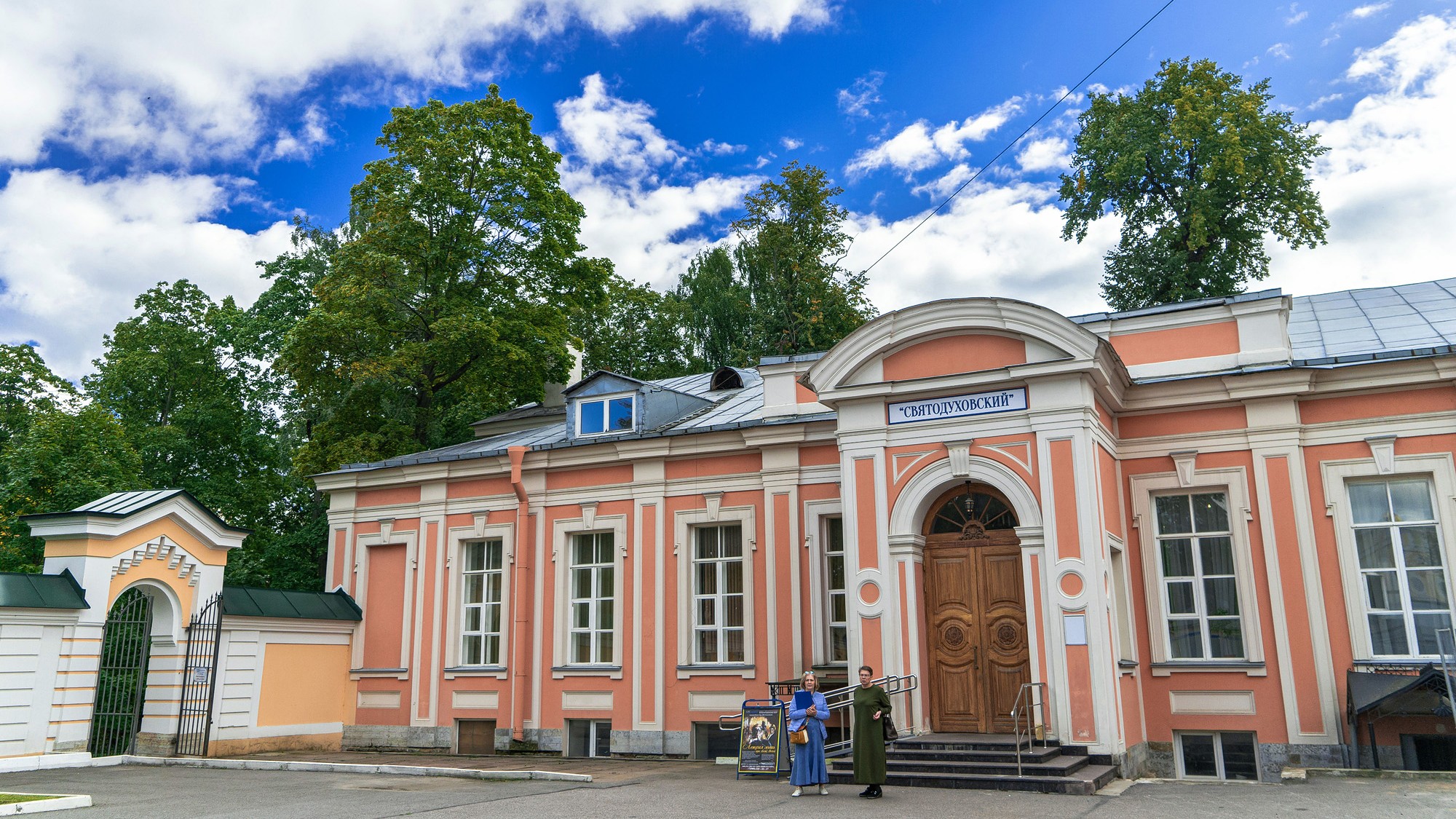
The business program was opened by Elena Kellermann, founder of the "Kulturama" cluster. In her address, she shared the personal story behind the project's origins and described the difficult but inspiring journey of creating a modern educational space within an architectural landmark. In 1911–1912, architect Nikolai Dmitriev designed and built the House of Educational and Enlightenment Institutions on Obvodny Canal, where educational and sports clubs were opened for residents of the surrounding working-class district. During the Soviet era, the site was known as the A. D. Tsyurupa Palace of Culture, and at the end of the 20th century it operated as a concert venue where well-known rock bands performed. In this sense, the building has always been a place of education and creativity. The recent comprehensive restoration culminated in the opening, in September 2025, of the "Kulturama" center, which includes a private school, a kindergarten, several creative workshops and studios, and a theater hall.
Evgenia Bogataya, director of the BÜROMARTEN studio, which designed "Kulturama's" interiors, introduced the audience to the building history and architectural features of the House of Educational and Enlightenment Institutions, along with a photo chronicle of its active life over the years. Turning to her own project — the creation of an educational space spanning more than 5,000 square meters — she showed how innovative design integrates with architectural heritage while preserving historical continuity. The architects' main task, she said, was to make the space itself an unobtrusive tool for development: custom lighting design, acoustic comfort, and open floor plans stimulate children's curiosity, allowing the architecture to act as a co-author of the educational process.
Valeria Kisochkina, founder of the restoration company "SM Nasledie," addressed the practical side of reviving the interiors. Listeners were briefly taken into the restoration "kitchen," learning about the cleaning of façades and the restoration of stucco ornamentation, pilasters, and staircases. The speaker emphasized that the restoration work did more than simply preserve the architectural details — it also gave them the durability needed for daily, intensive use by both children and adults.
Timur Matveev, General Director of "Display-Art," the company that produced custom furniture for "Kulturama" based on the architects' designs, spoke about the ergonomics of the physical environment. He explained why standard, catalog-based furniture was fundamentally unsuited to the project's needs, requiring the development of entirely custom solutions instead. The furniture is designed to adapt to shifting educational scenarios: tables and modules can be easily reconfigured for individual focus, group projects, theater rehearsals, or open workshops.
The series of presentations concluded with Egor Kudryashov, Director of Educational Projects at "Kulturama." He presented the cluster's ecosystem, in which a general-education school coexists and interacts with creative studios and workshops, and outlined the project's pedagogical concept — built on the idea of a child's continuous, interdisciplinary development through a combination of academic training and hands-on practice in the creative industries.
The event was hosted by Maria Borisova, Deputy Chair of the Organizing Committee of the Golden Trezzini Awards.
After the session in the theater hall, guests split into groups for a tour of the cluster's building. Symposium participants were able to see the results of the renovation firsthand: the restored stone staircases, bright classrooms, reconfigurable studios, and even a small museum devoted to the history of the House of Educational and Enlightenment Institutions, created by the "Kulturama" team. Members of the Worldwide St. Petersburg Club expressed shared admiration that the renovated building had not become an impersonal commercial property, but instead a living, contemporary space for the younger generation.
The Worldwide St. Petersburg Club and the Organizing Committee of the International Golden Trezzini Awards extend their deep gratitude to the educational creative cluster "Kulturama," and personally to the project's founder, Elena Kellermann, for their warm hospitality, for co-hosting the symposium, and for the high level of its organization.
About the Golden Trezzini Awards:
The Golden Trezzini is an international award for outstanding contributions to architecture as an art form. It is the only award in the world whose winning projects enter the collection of a state museum. The award was established in 2018 under the auspices of the Worldwide St. Petersburg Club and is named after Domenico Trezzini, the first architect of St. Petersburg. The award's International Council is chaired by Mikhail Piotrovsky, President of the Worldwide St. Petersburg Club and General Director of the State Hermitage Museum. The council and jury include more than 200 experts from 35 countries. Over the award's history, more than 8,000 entries from 117 countries have competed for the Golden Trezzini statuette.
Applications for the ninth season of the award are now closed. This year, 1,520 projects from 48 countries are competing for the Golden Trezzini statuette.
Public voting for the People's Choice Award is now open on the award's official website until November 3: https://www.goldtrezzini.ru/nominees_2026/. The selection committee will announce the shortlist of finalists on October 20. The winners will be announced and honored at a formal ceremony at the State Hermitage Museum.
Projects by winners and finalists will be featured at the annual exhibition "Architecture as Art" at the Peter and Paul Fortress in 2027, and the best works will join the collection of the State Museum of the History of St. Petersburg.
Applications for the tenth, anniversary season of the Golden Trezzini Awards will open in February 2027.
Photo: Elik Yafarov
Partners of the 2026 Golden Trezzini Awards
Corinthia St Petersburg, Fresa's Restaurant Group, Rosseti Lenenergo, PSB ZhilStroy LLC, Kraski Friedlander, TREST Group, AAG, REDMOND, STARKWOOD, DEVELOPMENT SYSTEMS, Romantic Cerama, LSR. Stenovye LLC., BERKANO, Nevsky Alliance, Krasivy Gorod.All partners
Photo Gallery