From Easter Music to Restoration Secrets: A Meeting at the Savior on Spilled Blood
On April 15, 2026, the third joint event involving the Worldwide St. Petersburg Club, the organizing committee of the Golden Trezzini Awards, and the St. Isaac’s Cathedral State Museum took place.
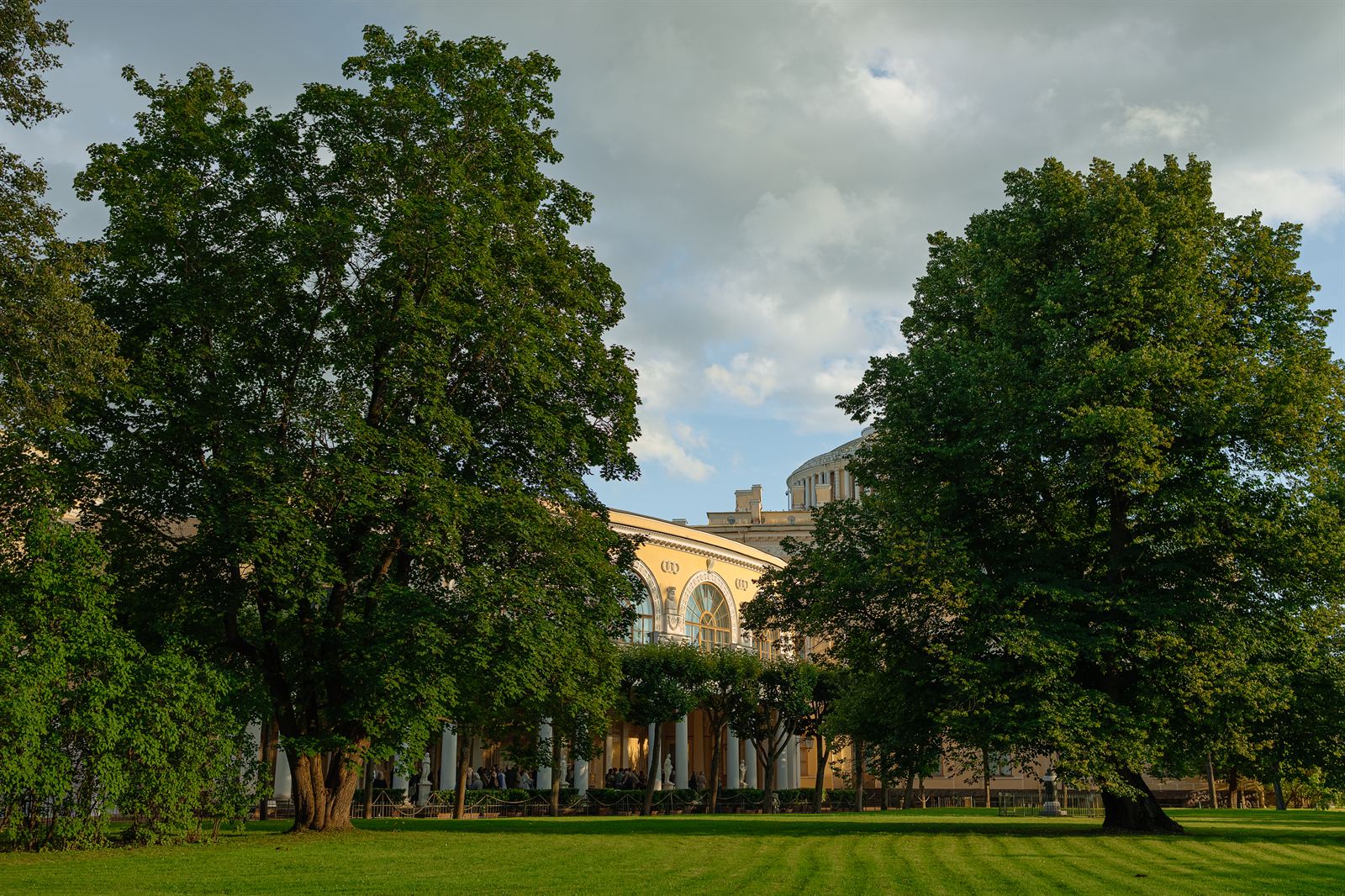
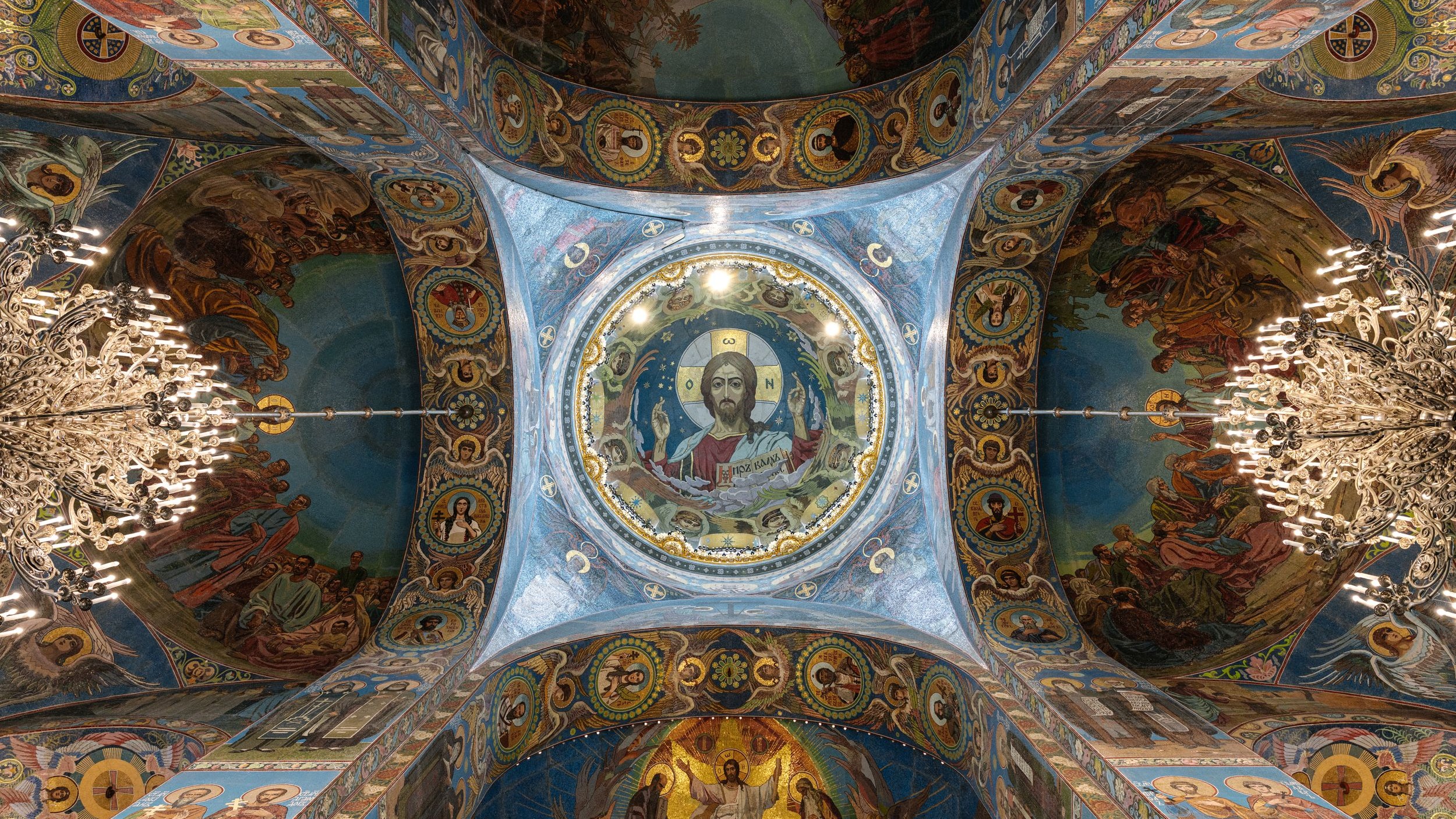
Previously, in 2024, the museum hosted the Club and the Golden Trezzini guests at St. Isaac’s Cathedral and the Yusupov Palace on Liteyny Avenue. Those meetings initiated discussions on the preservation and adaptation of architectural monuments. This time, participants gathered under the vaults of the Church of the Resurrection of Christ (Savior on Spilled Blood) for a symposium titled: "Exterior Appearance and Interior Decoration of the Temple: Architecture, Restoration, Art."
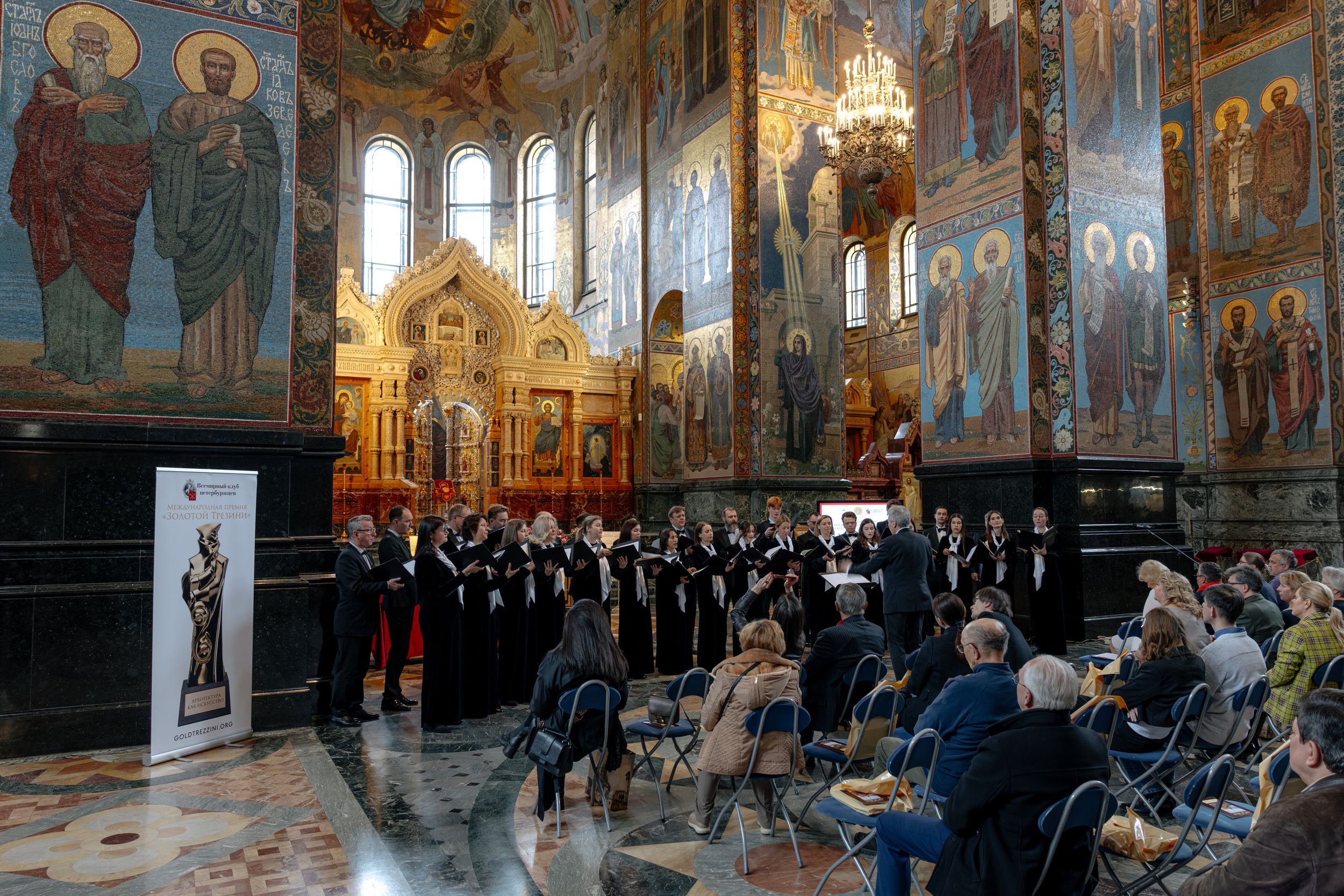
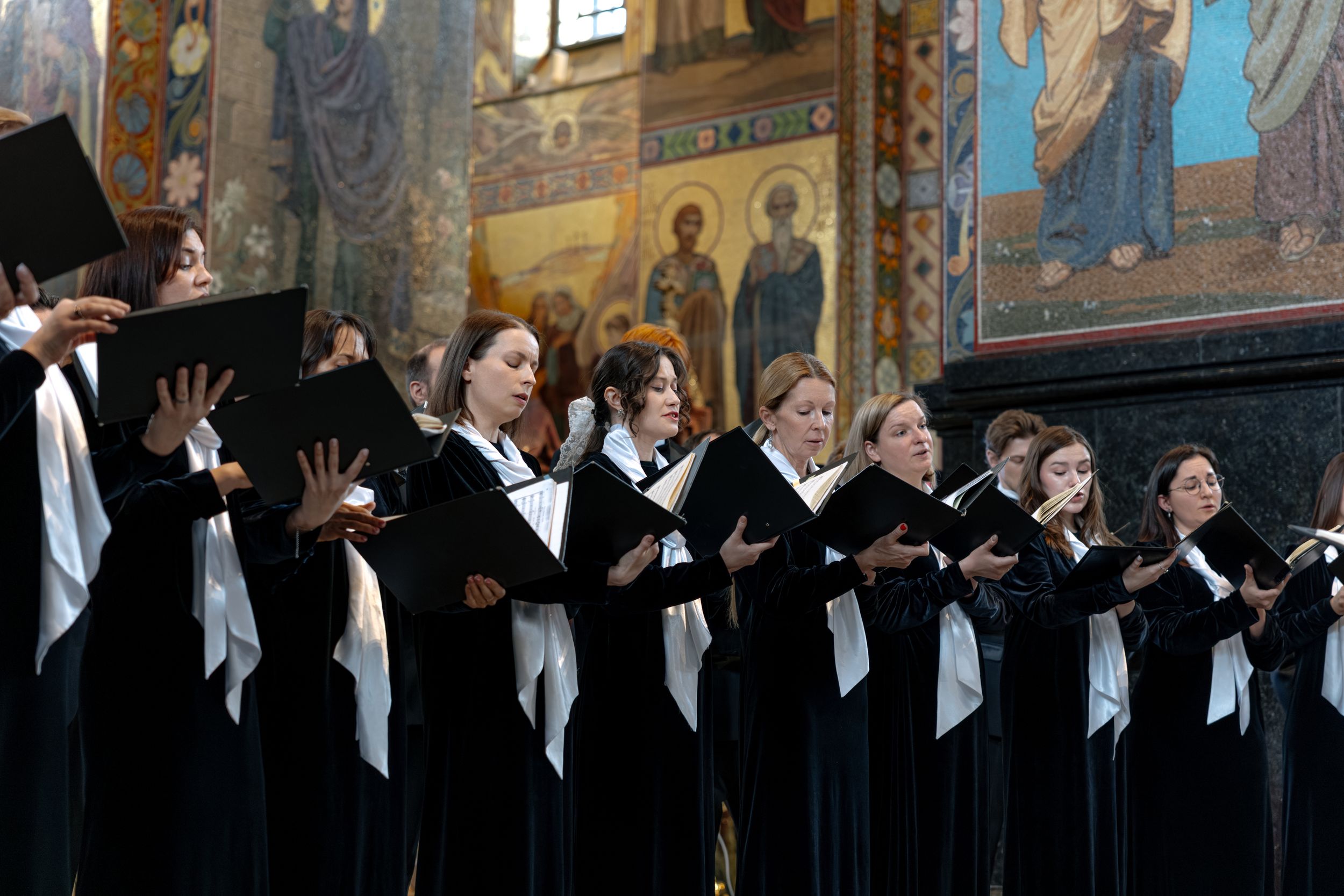
The event followed the tradition of being held on a museum day off, allowing participants to enjoy the cathedral without crowds. It began with a guided tour, followed by a remarkable musical performance by the Concert Choir of St. Petersburg, conducted by Honored Artist of Russia Vladimir Begletsov. The program featured Dmitry Bortniansky’s choral concerto "Let God Arise" and fragments from Sergei Rachmaninoff’s "All-Night Vigil."
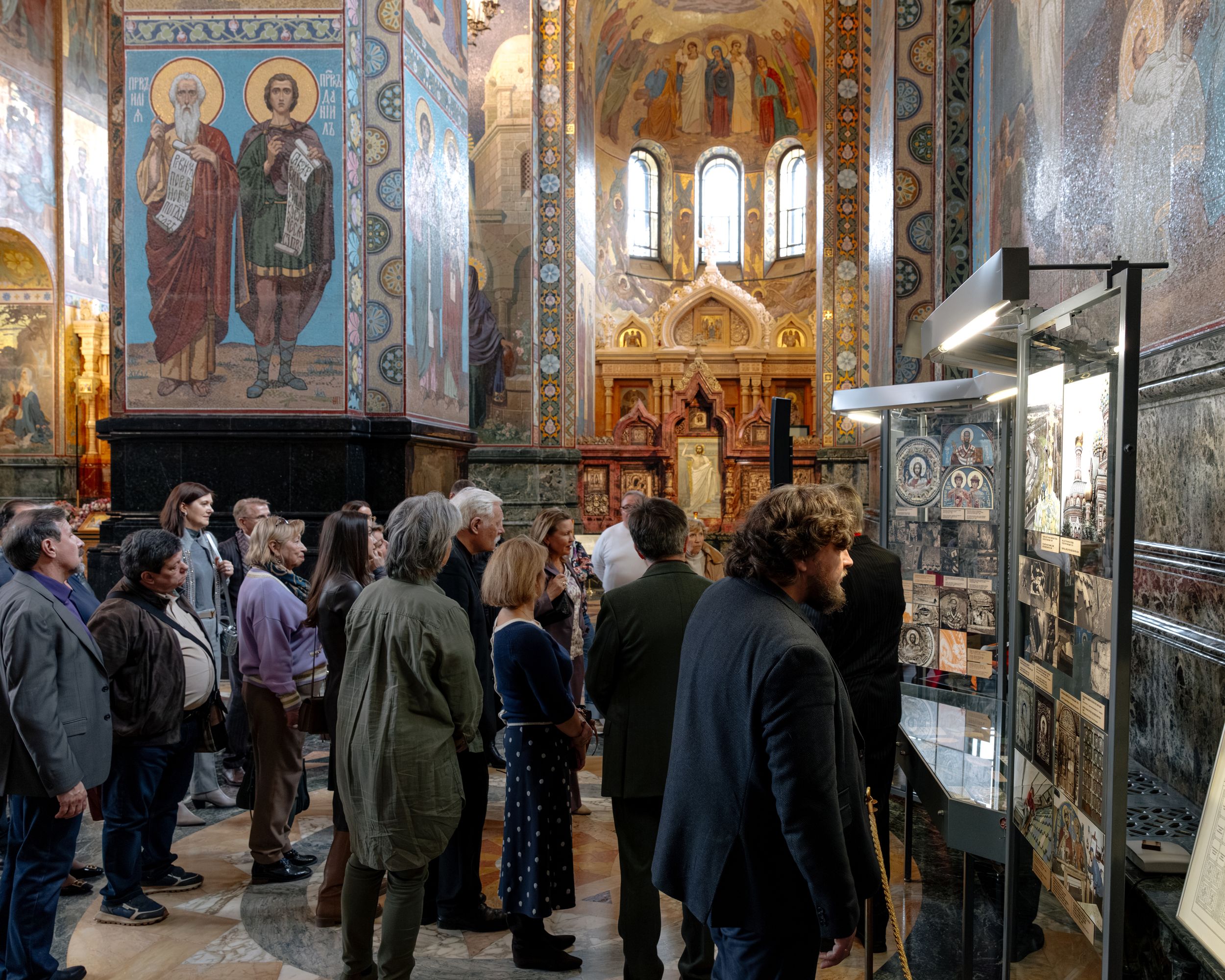
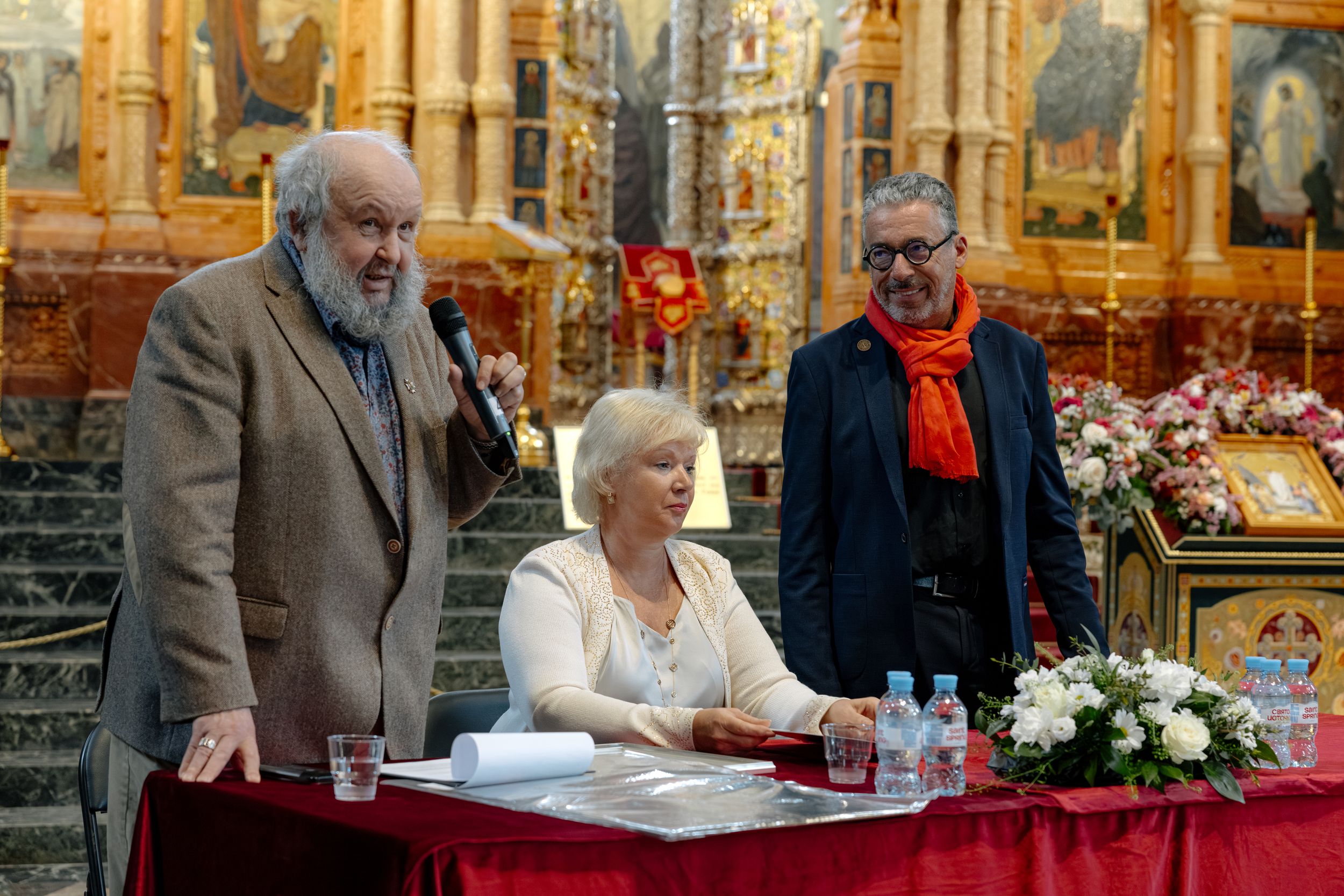
Opening the meeting, Yury Mudrov, Director of the St. Isaac’s Cathedral State Museum, noted the "warm and fruitful relationship" established between the museum, the Worldwide St. Petersburg Club, and the Golden Trezzini Awards. He expressed his joy that the new meeting was being held in a place so unlike other "calling cards" of St. Petersburg, yet so iconic for the city, as the Savior on Spilled Blood.
During the ceremony, Natalia Sidorkevich, Chair of the Board of the Worldwide St. Petersburg Club, took the opportunity to announce some news: Yury Mudrov has been inducted into the ranks of the Club’s members. Right at the event, the museum director took a solemn oath and received his membership certificate.
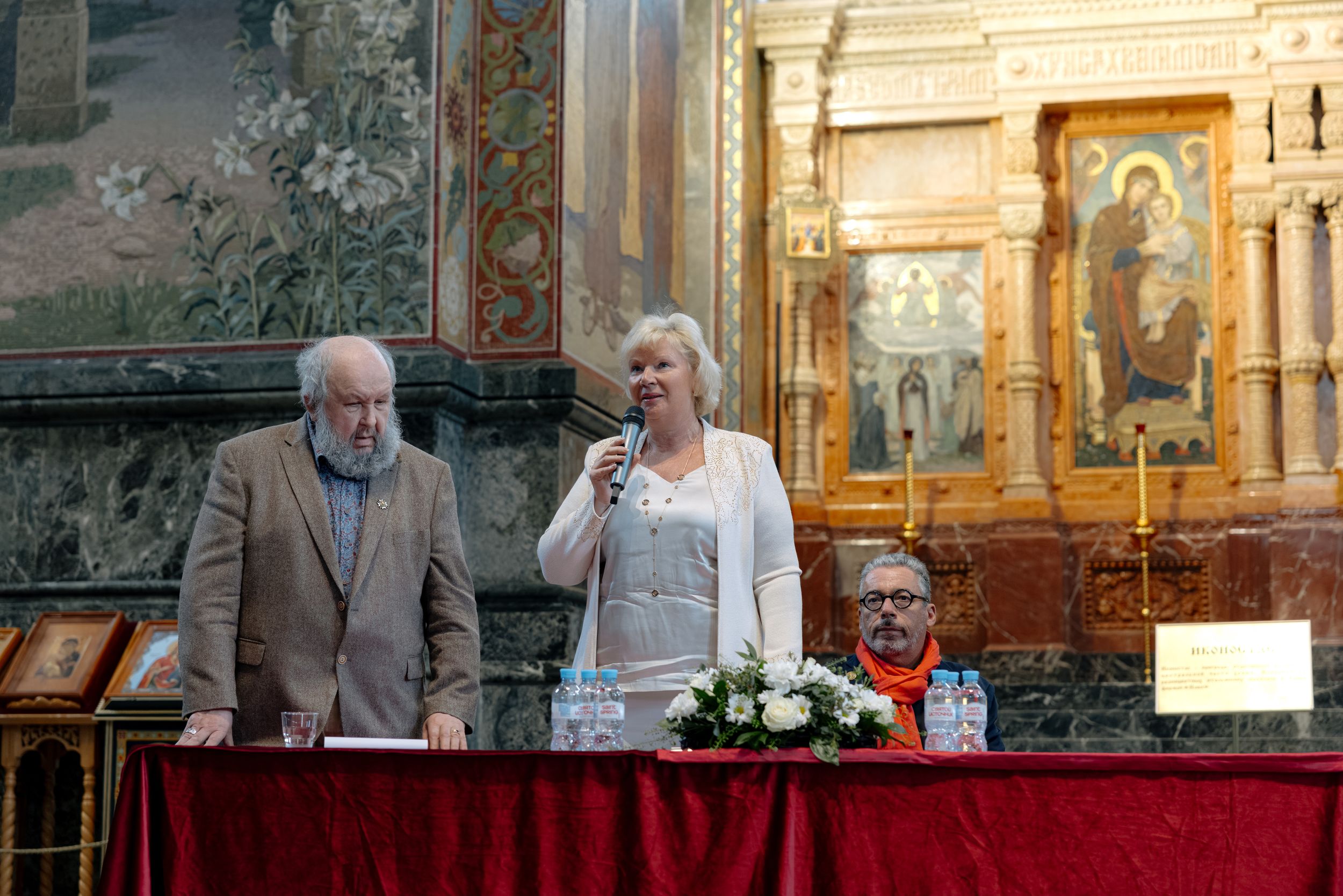
Pavel Chernyakov, Chairman of the Organizing Committee for the Golden Trezzini International Awards, thanked Yury Mudrov and the team of the St. Isaac’s Cathedral Museum for their hospitality and expressed admiration for the consistently high professionalism with which events are hosted at such diverse venues as St. Isaac’s Cathedral, the Yusupov Palace on Liteyny—and now the Savior on Spilled Blood.
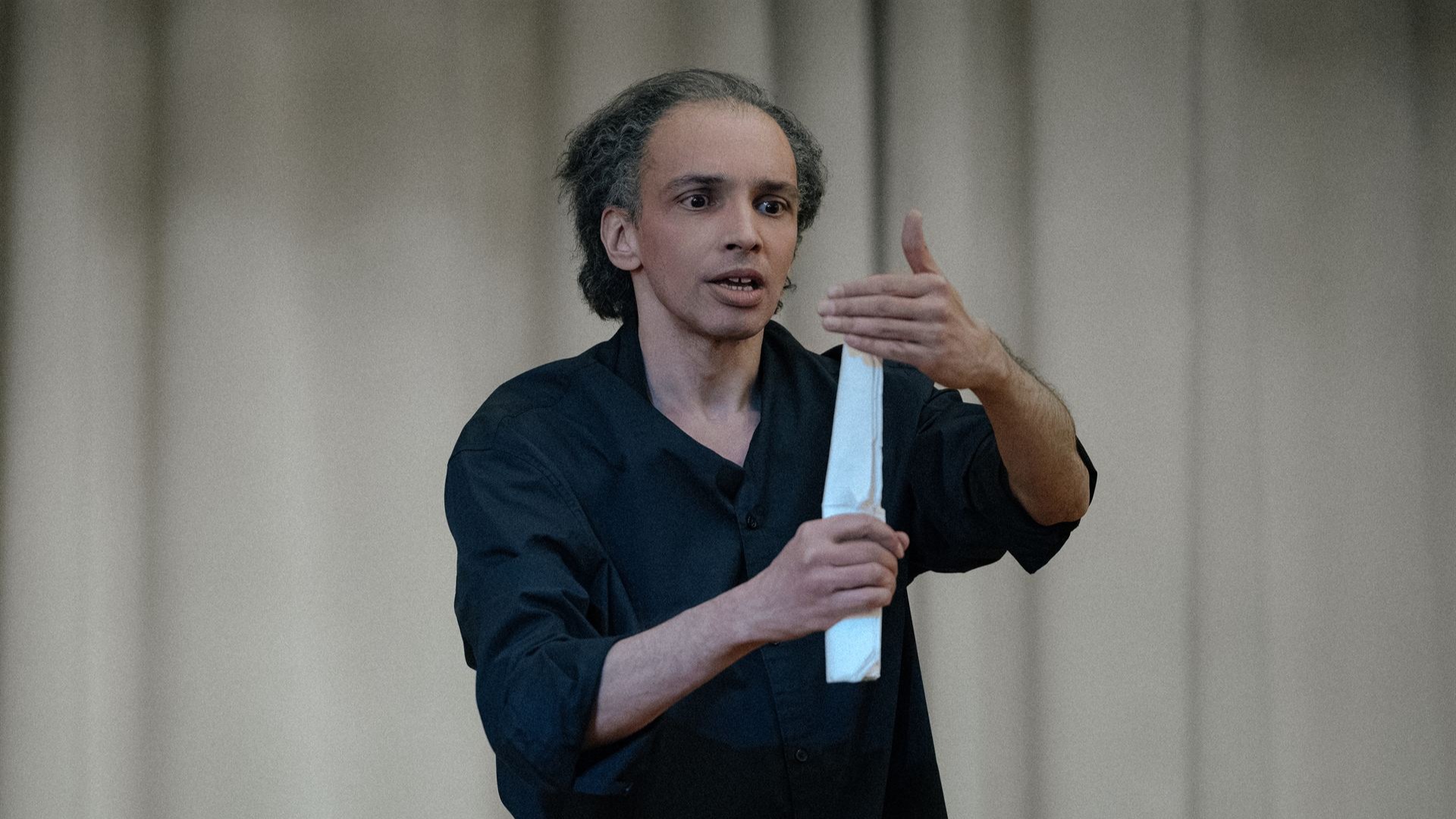
The main part of the session began with a report by Petr Shchedrin from the Vozrozhdenie Peterburga (Renaissance of St. Petersburg) company. The company has been engaged in the comprehensive restoration of the Savior on Spilled Blood for a long time, and the speaker spoke about recent works and those currently underway. Specifically, one of the primary restoration objects is the bell tower. The audience learned about the process of gilding the dome and the cross, working with damage to stone elements and brickwork, and viewed interesting working photographs of the restoration process.
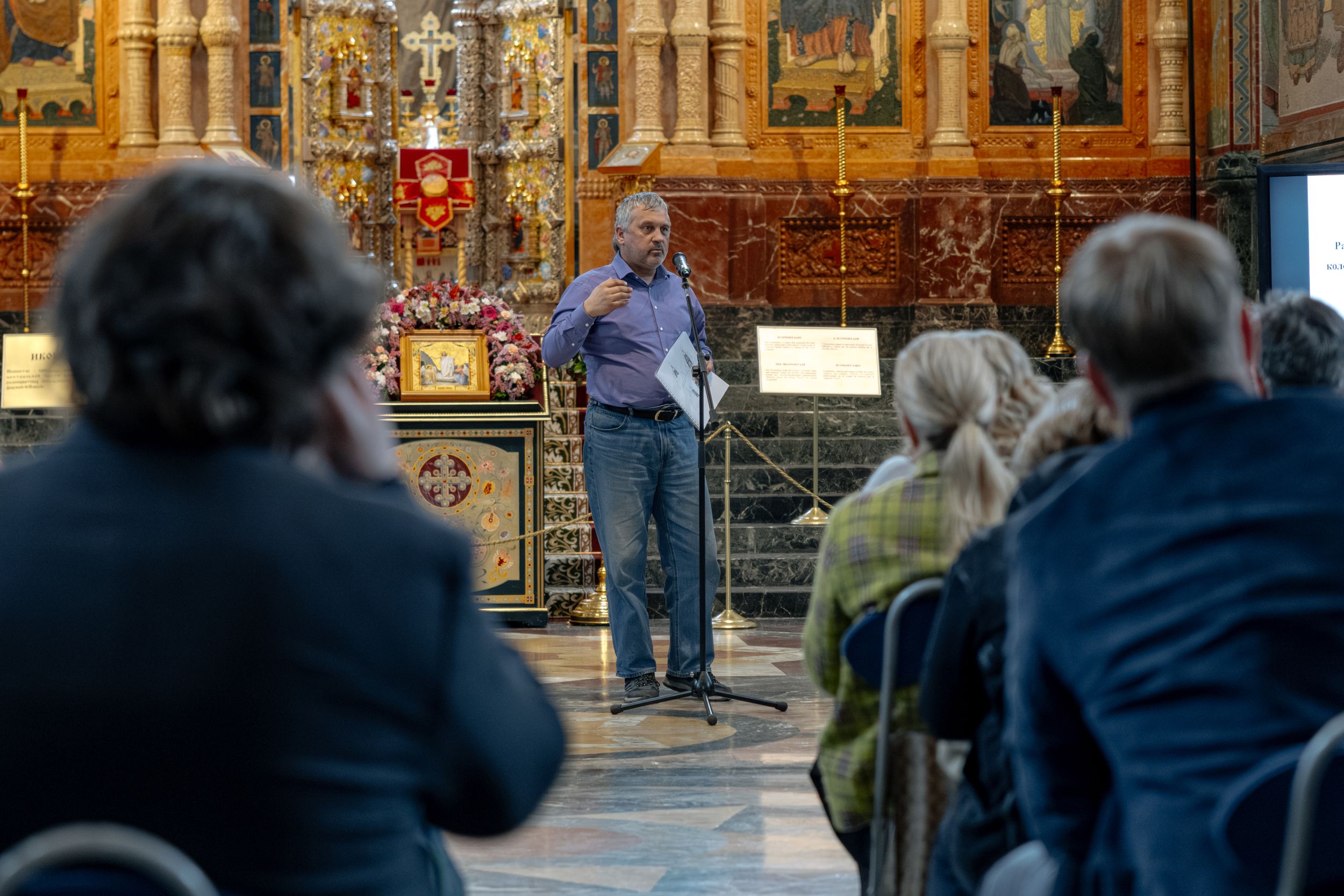
Olga Lavrenenko, a restoration artist from the Kantarel Mosaic Studio, gave a presentation on the restoration of temple mosaics. Among the typical causes of damage to mosaic images, she cited, for example, the corrosion of the armature beneath the mosaic layer and the practice of painting over religious symbols during the Soviet era. Furthermore, while the problems may be identical, solutions sometimes have to be uniquely tailored. At one time, Igor Lavrenenko, the founder of the Kantarel studio, developed a technology for restoring the mosaics of the Olga Hospital in Moscow that is applicable only to that specific site.
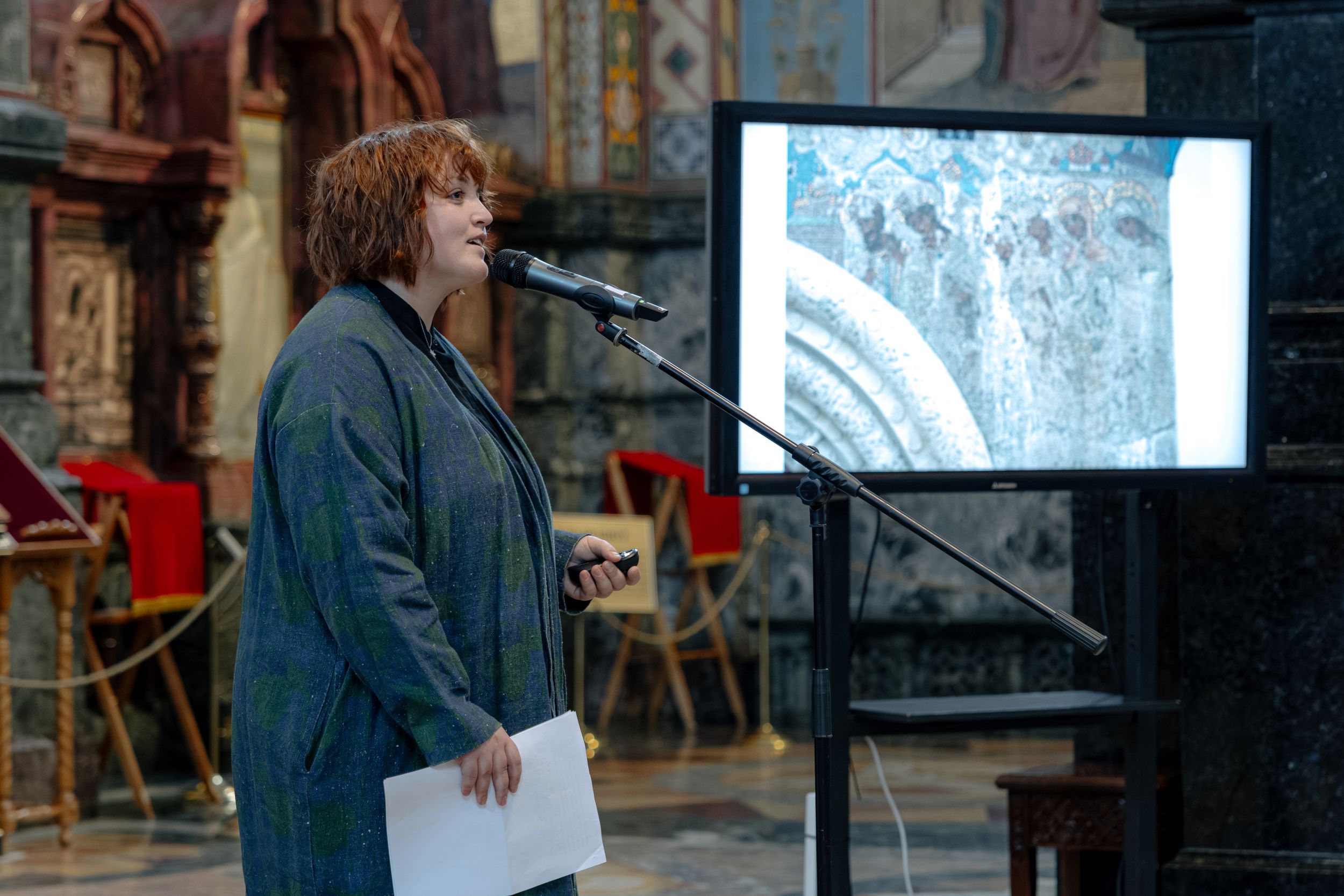
Mikhail Zheliostov, Deputy Project Manager for Production at PSB ZhilStroy LLC, dedicated his report to the recently completed restoration of the former Anglican Church on the English Embankment—the building was adapted into a concert hall and transferred to the management of the Chaliapin Musical Theatre. The speaker discussed the specifics of adapting a monument for a contemporary function, where it is necessary both to restore the object and integrate new technologies into it. He emphasized that all the modern concert equipment filling the hall is mobile—if necessary, it can be dismantled very quickly to return the space to its historical appearance.
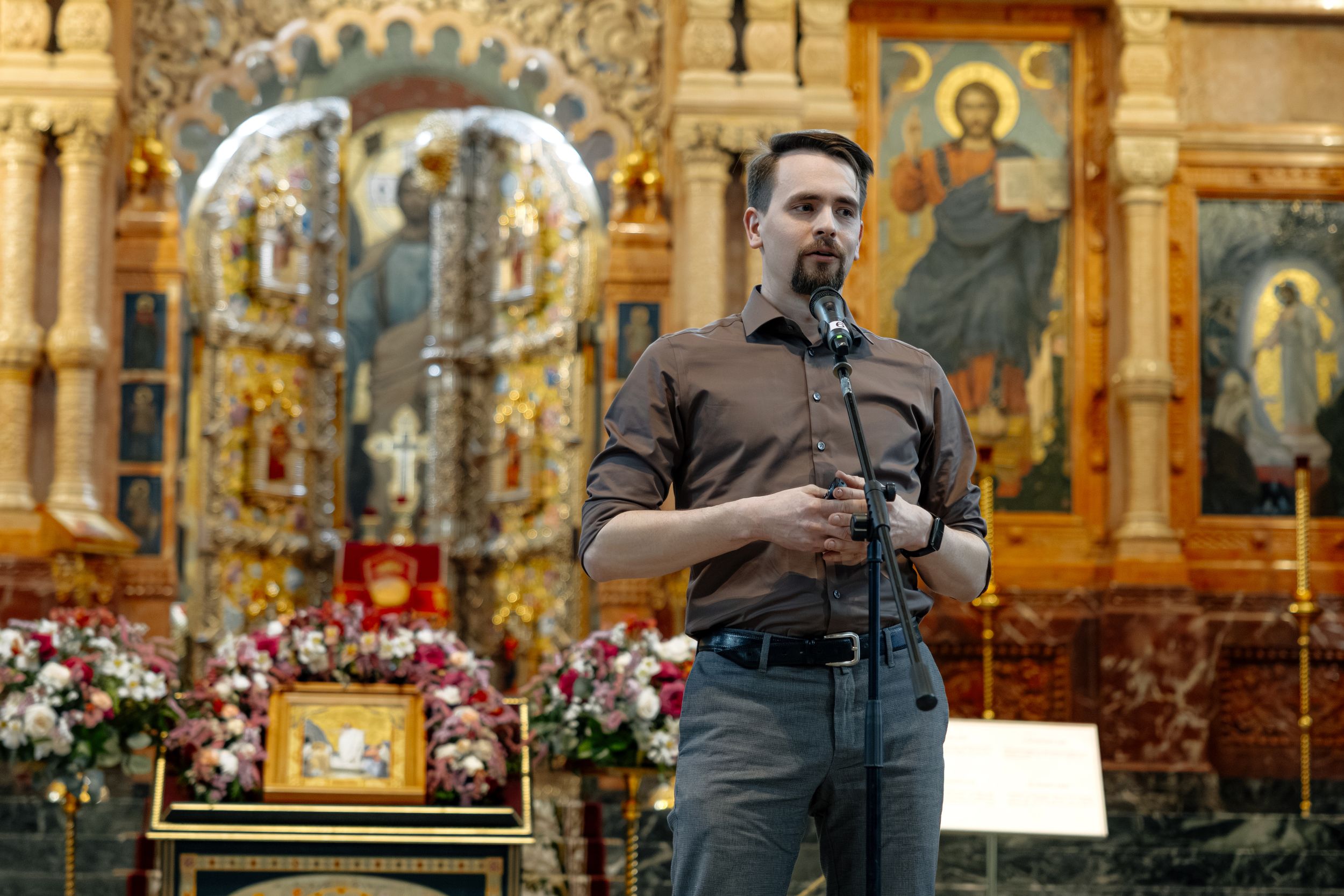
Anna Smirnova, General Director of Kraski Fridlender LLC ("Friedlander Paints"), prepared a presentation on the use of modern paint and varnish materials in the restoration of the exterior appearance and interior decoration of religious buildings. Using historical sites such as the Solovetsky Monastery, the Church of the Holy Great Martyr George the Victorious in Gruziny, the Feodorovskaya Church of the Alexander Nevsky Lavra, and others as examples, the speaker discussed the special requirements placed on materials used in the restoration of historical temples. Alongside the demand for durability against wear and temperature fluctuations, one of the main challenges is the need to select a modern synthetic paint that matches the shade of the original, which was typically created on an organic basis.
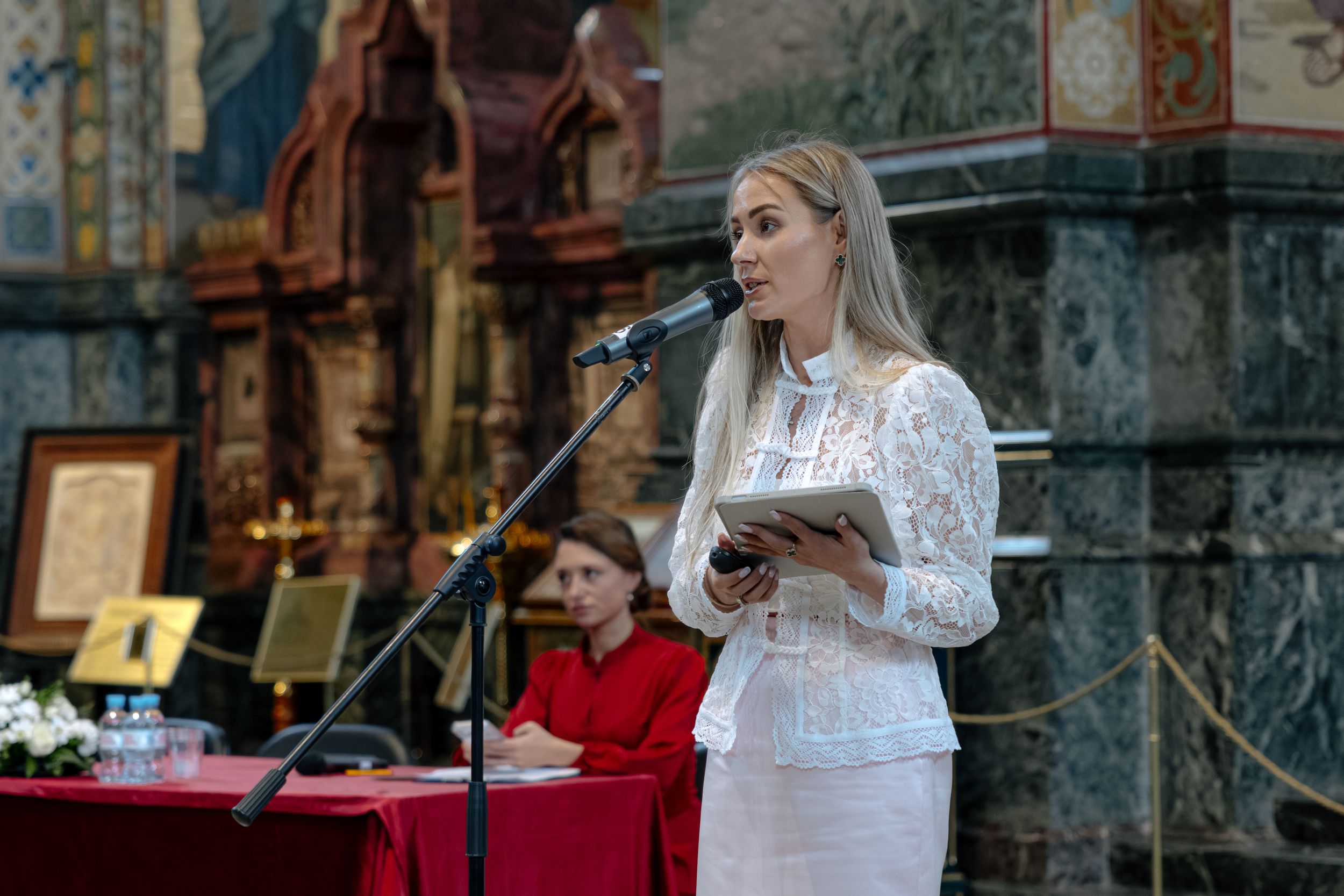
After the conclusion of the main program, the symposium guests moved from the Savior on Spilled Blood to the neighboring Chapel-Museum (the Chapel in the name of the Iveron Icon of the Mother of God) to view a newly opened exhibition marking the 145th anniversary of the death of Emperor Alexander II and for informal networking.
The Worldwide St. Petersburg Club and the Organizing Committee of the Golden Trezzini Awards express their deep gratitude to the team of the St. Isaac’s Cathedral State Museum, personally to Museum Director Yury Mudrov, and to the Assistant Director for Interaction with Religious Organizations and Lead Researcher Vasily Yakovlev, for the opportunity to gather in the Church of the Resurrection of Christ and for conducting the event at the highest level.
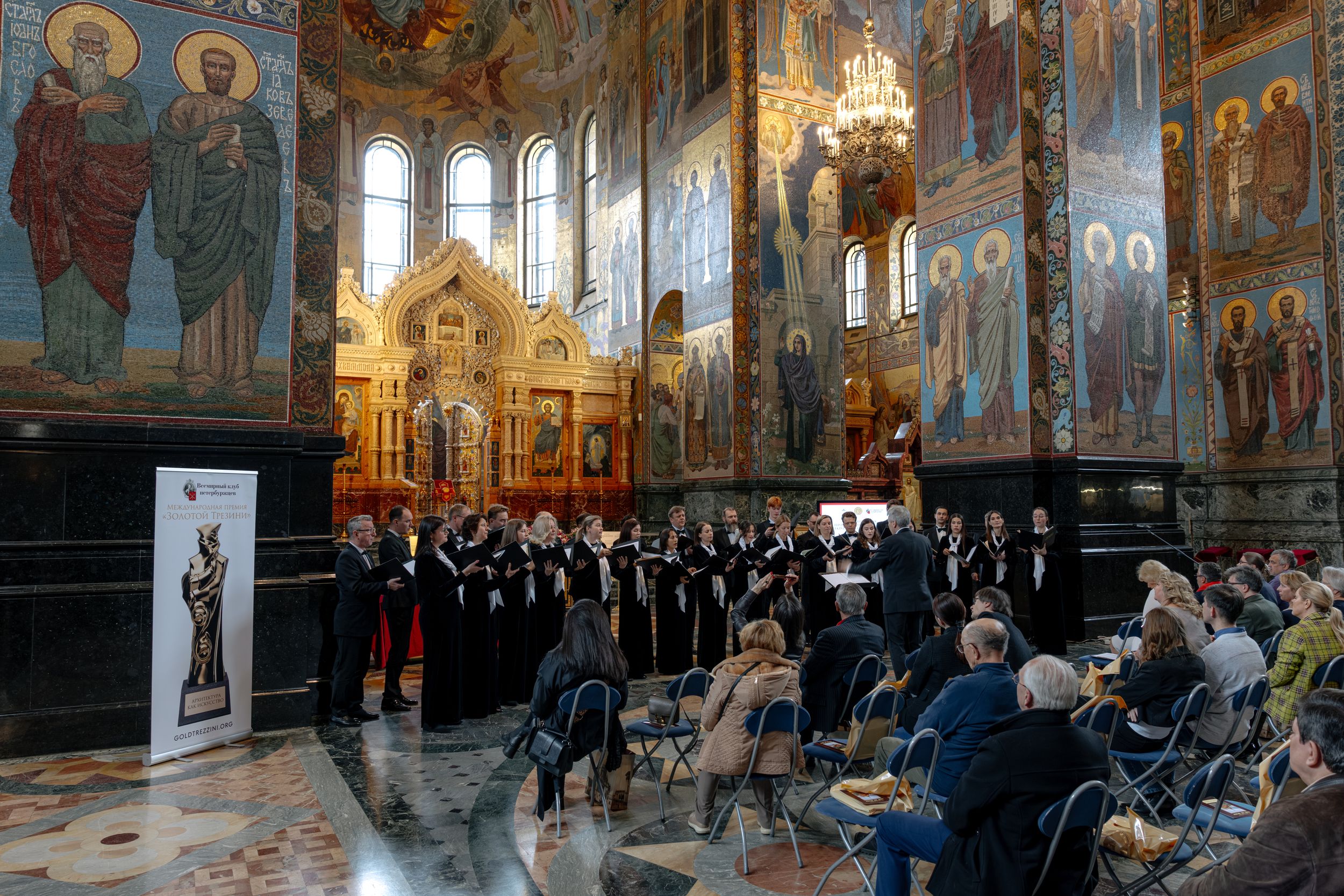
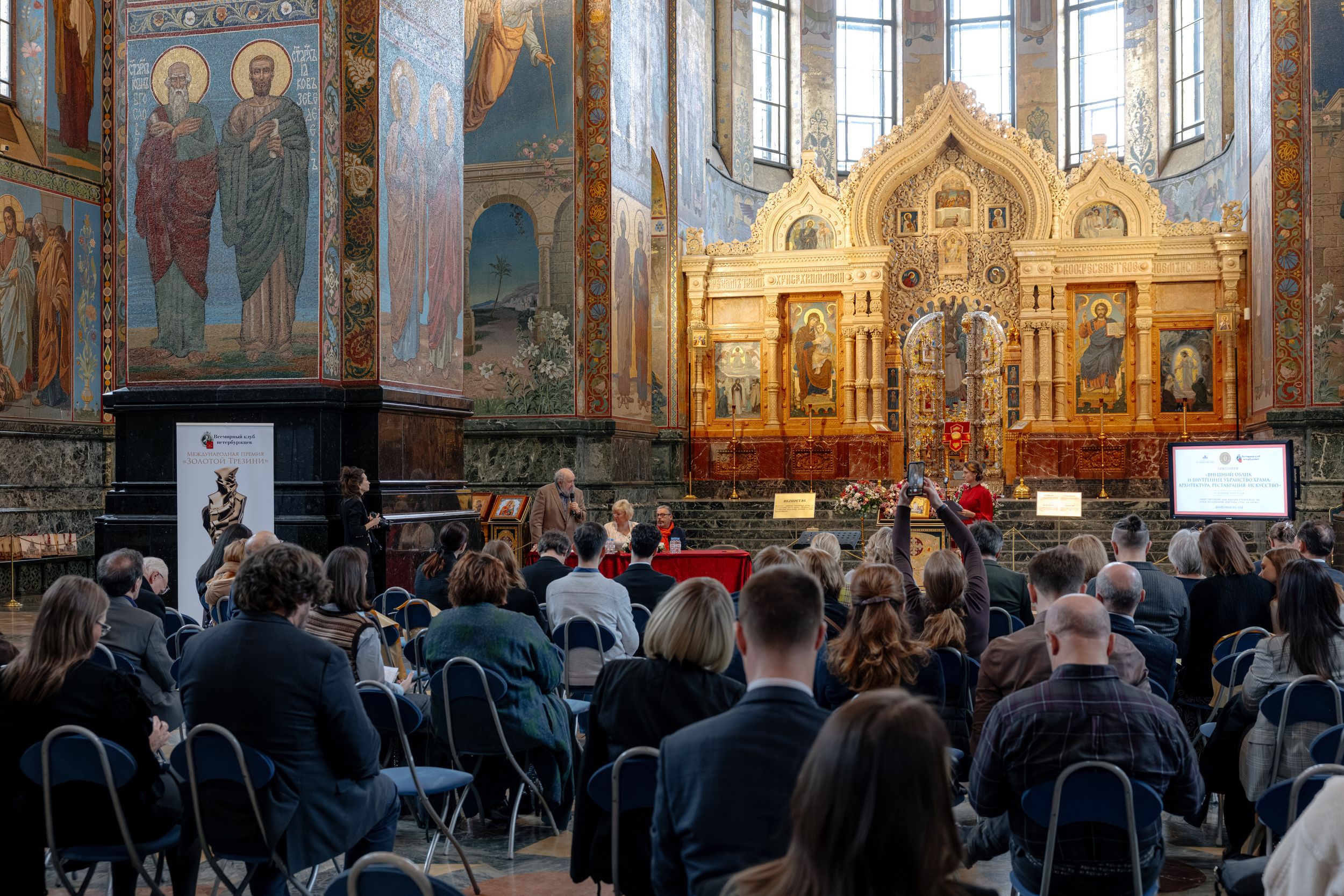
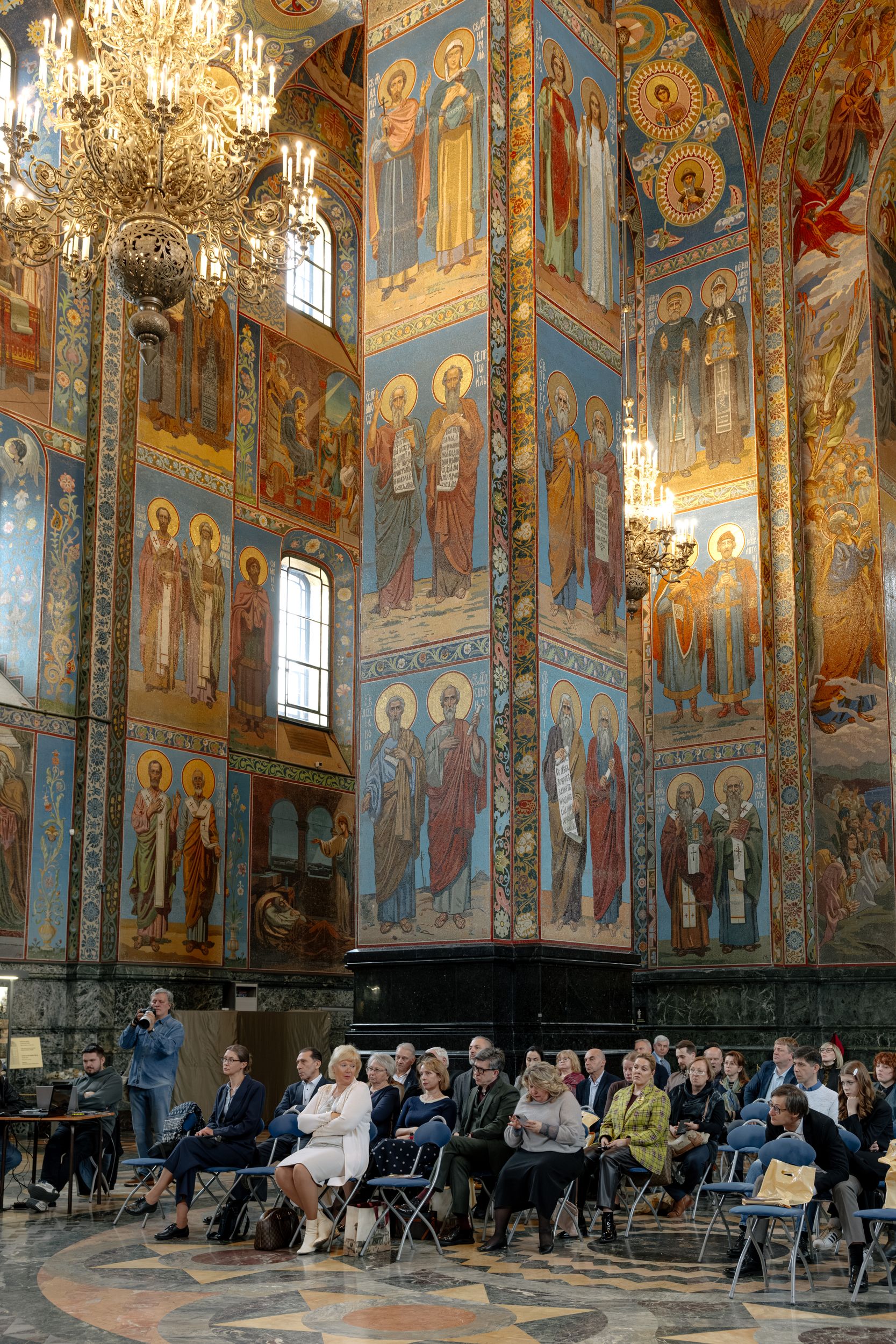
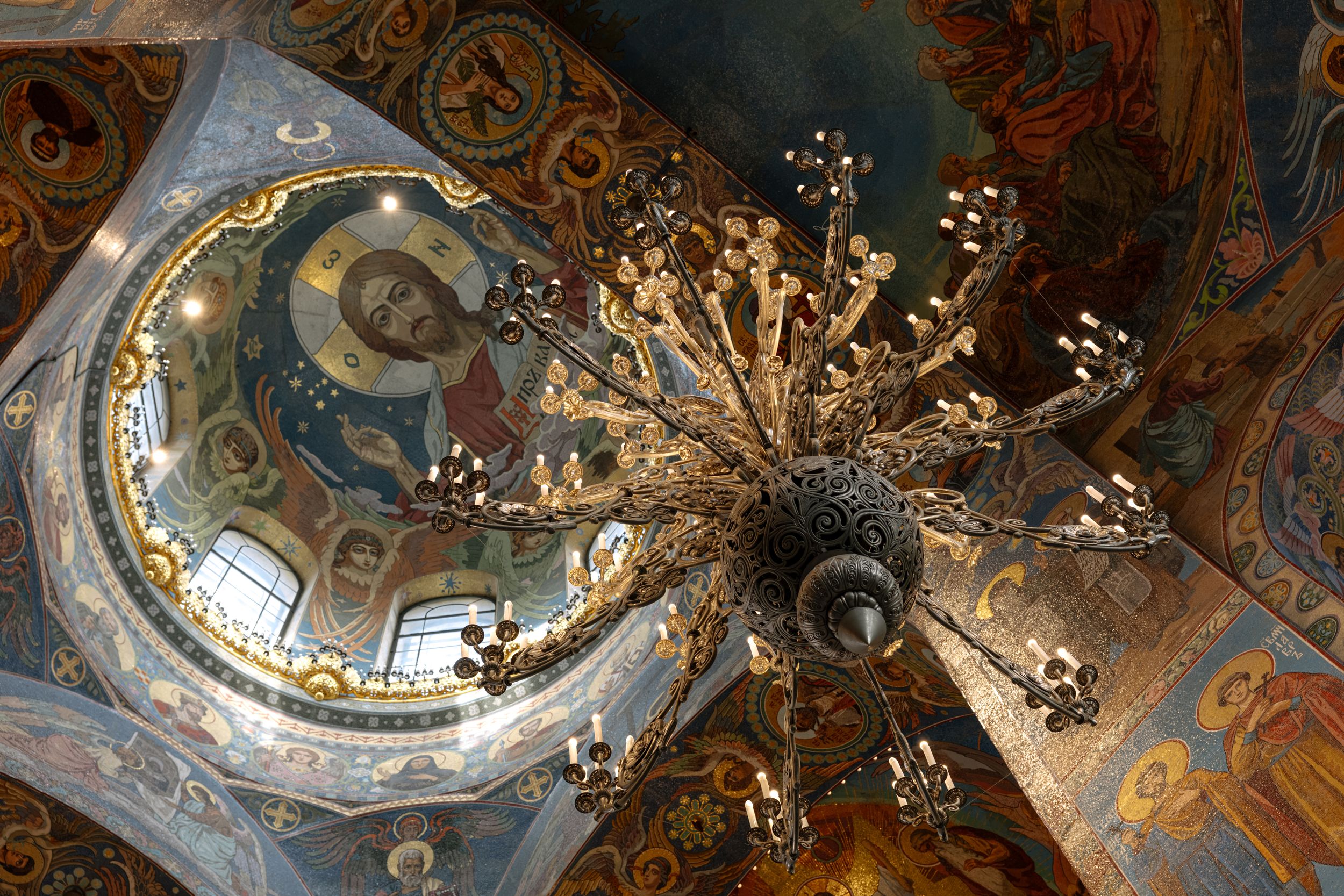
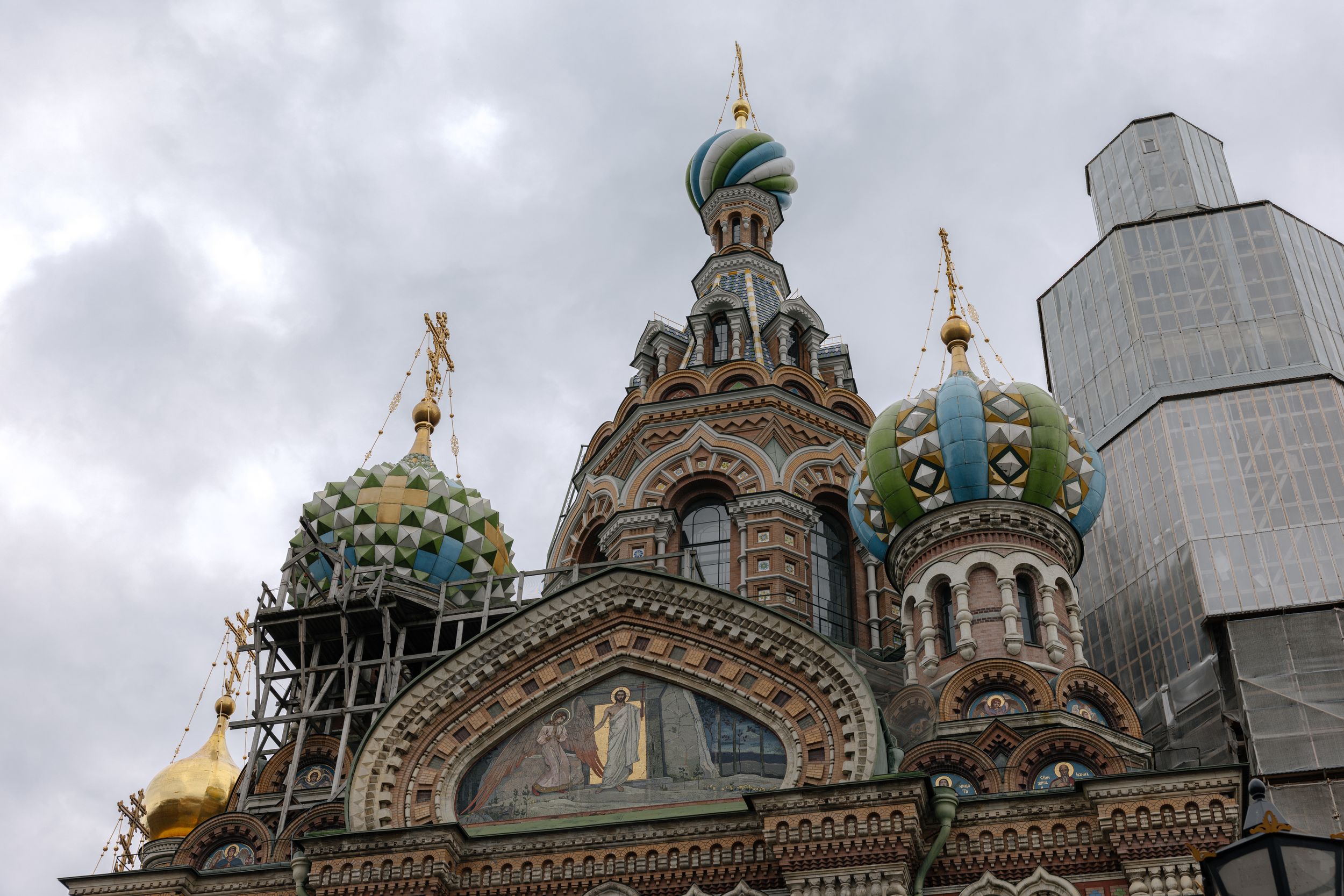
Photo by Elik Yafarov
Partners
Rosseti Lenenergo, PSB ZhilStroy LLC, Kraski Friedlander, TREST Group, REDMOND, DEVELOPMENT SYSTEMS, Romantic Cerama, LSR. Stenovye LLC., BERKANO, Nevsky Alliance.All partners