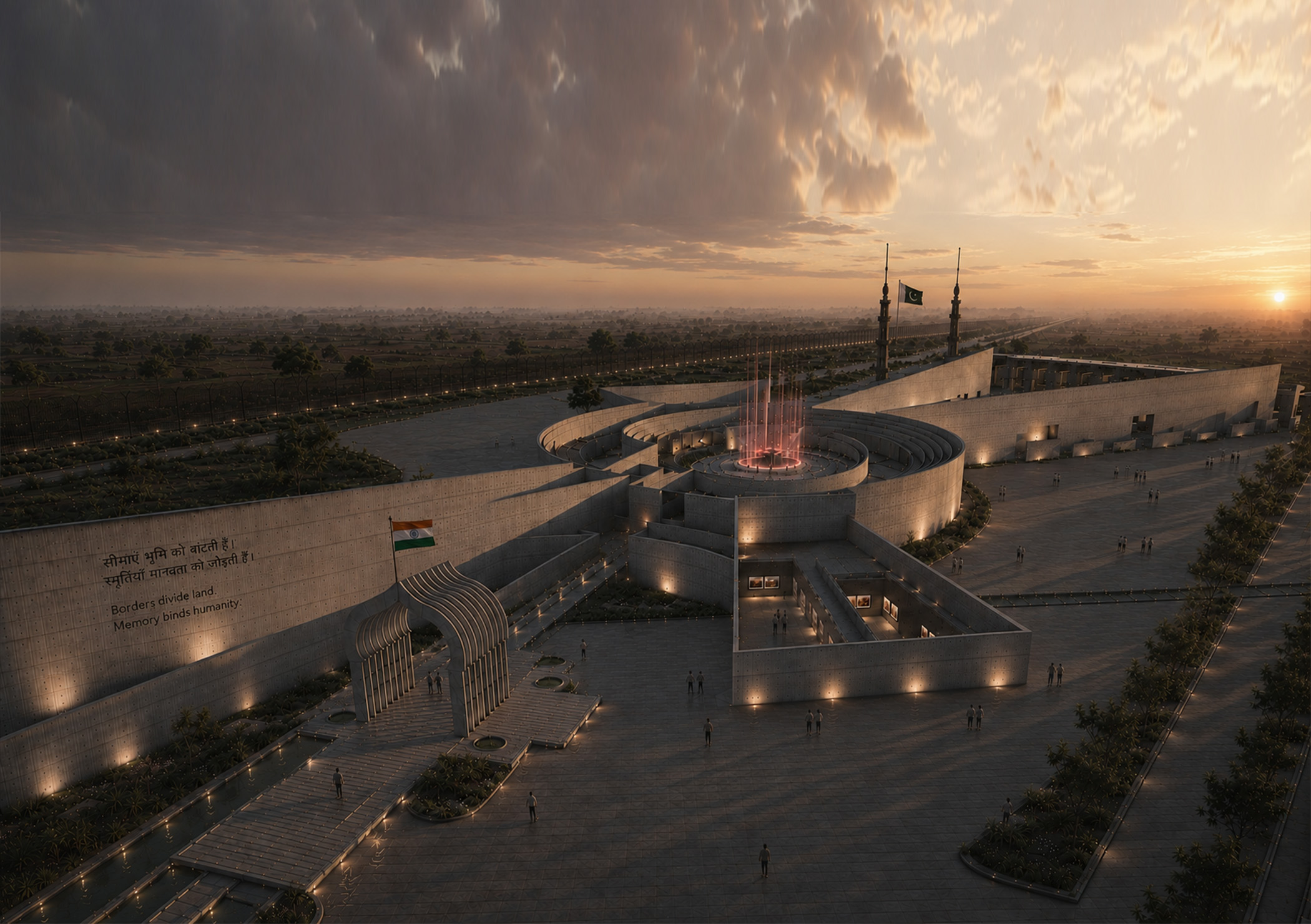
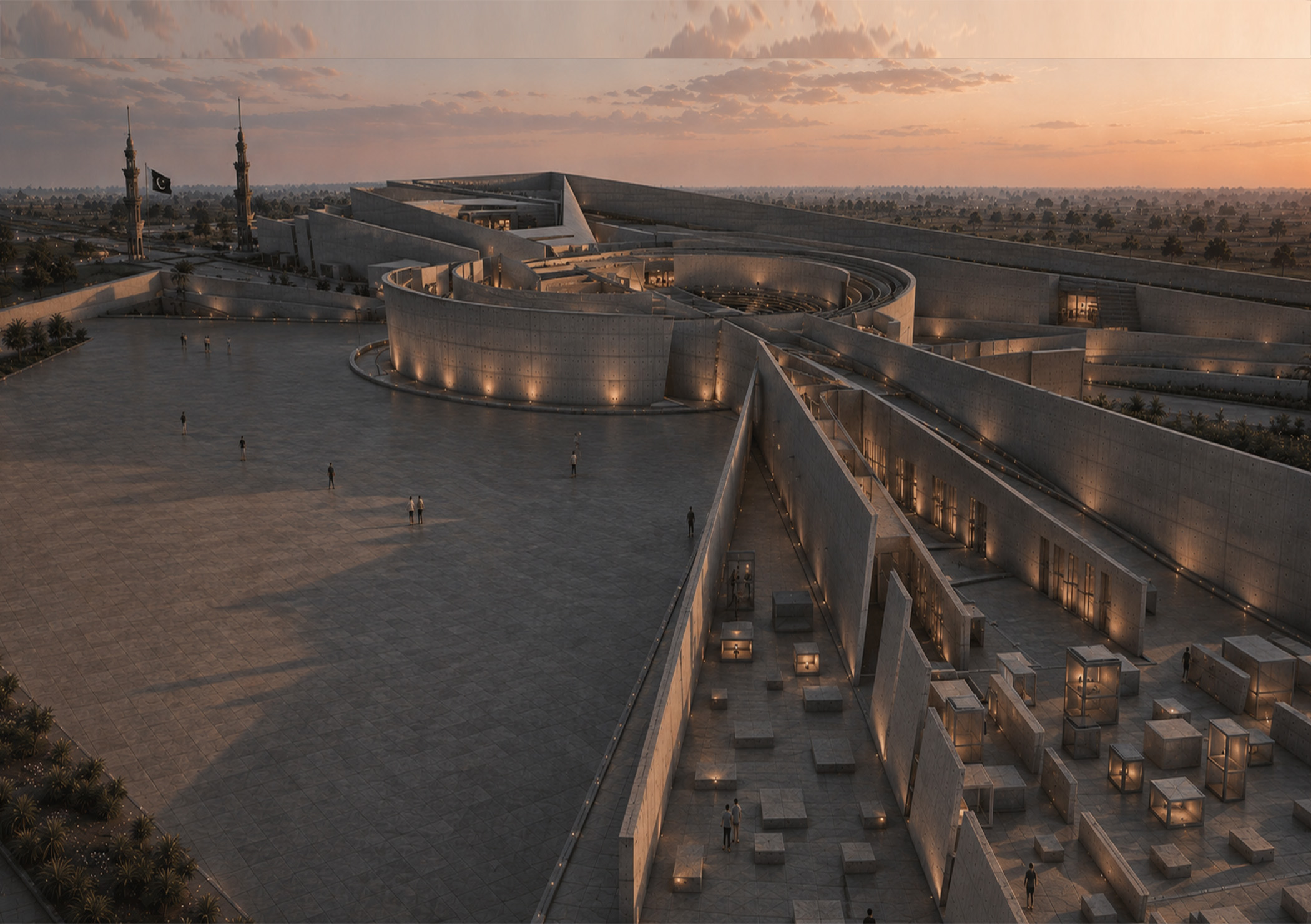
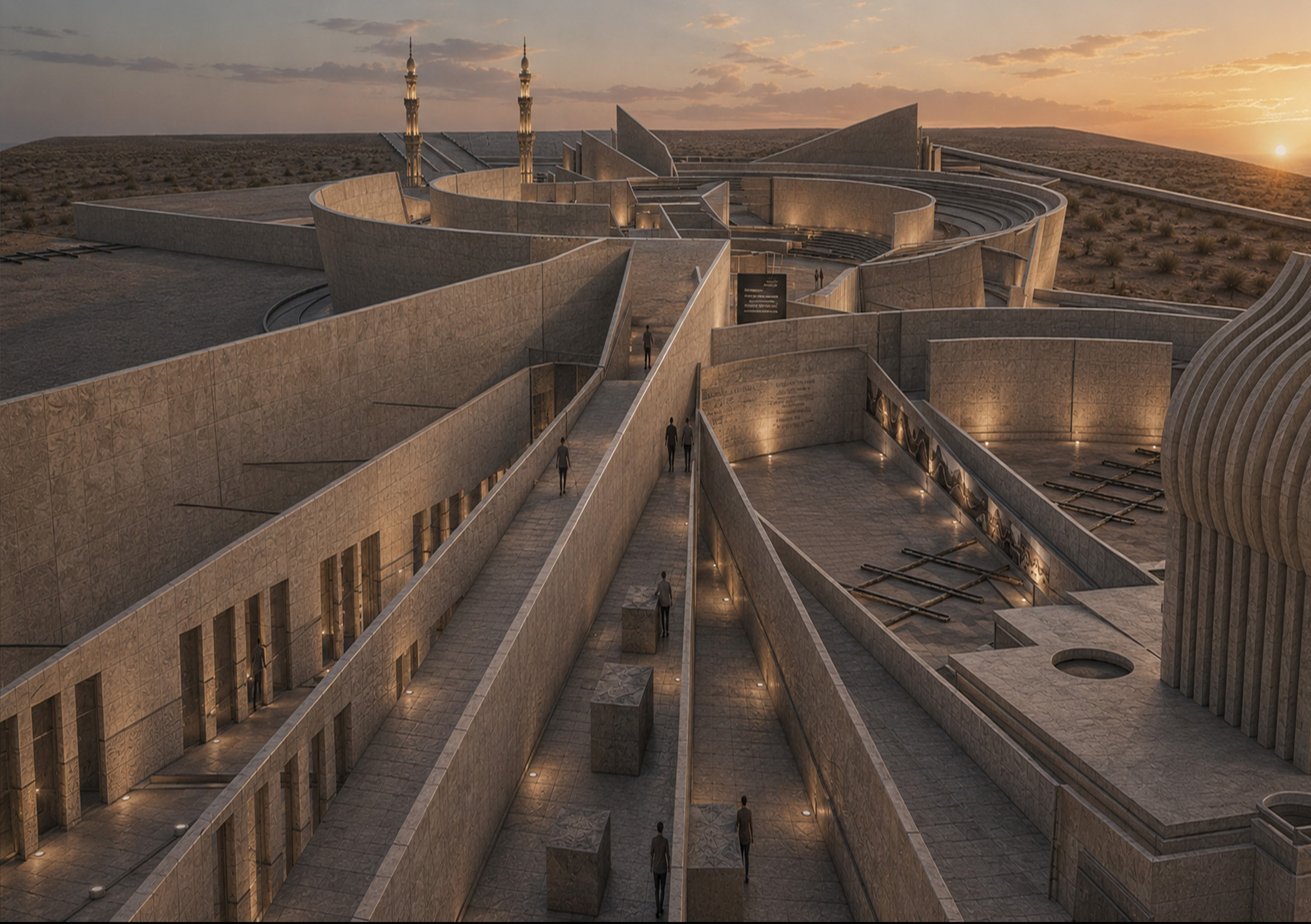
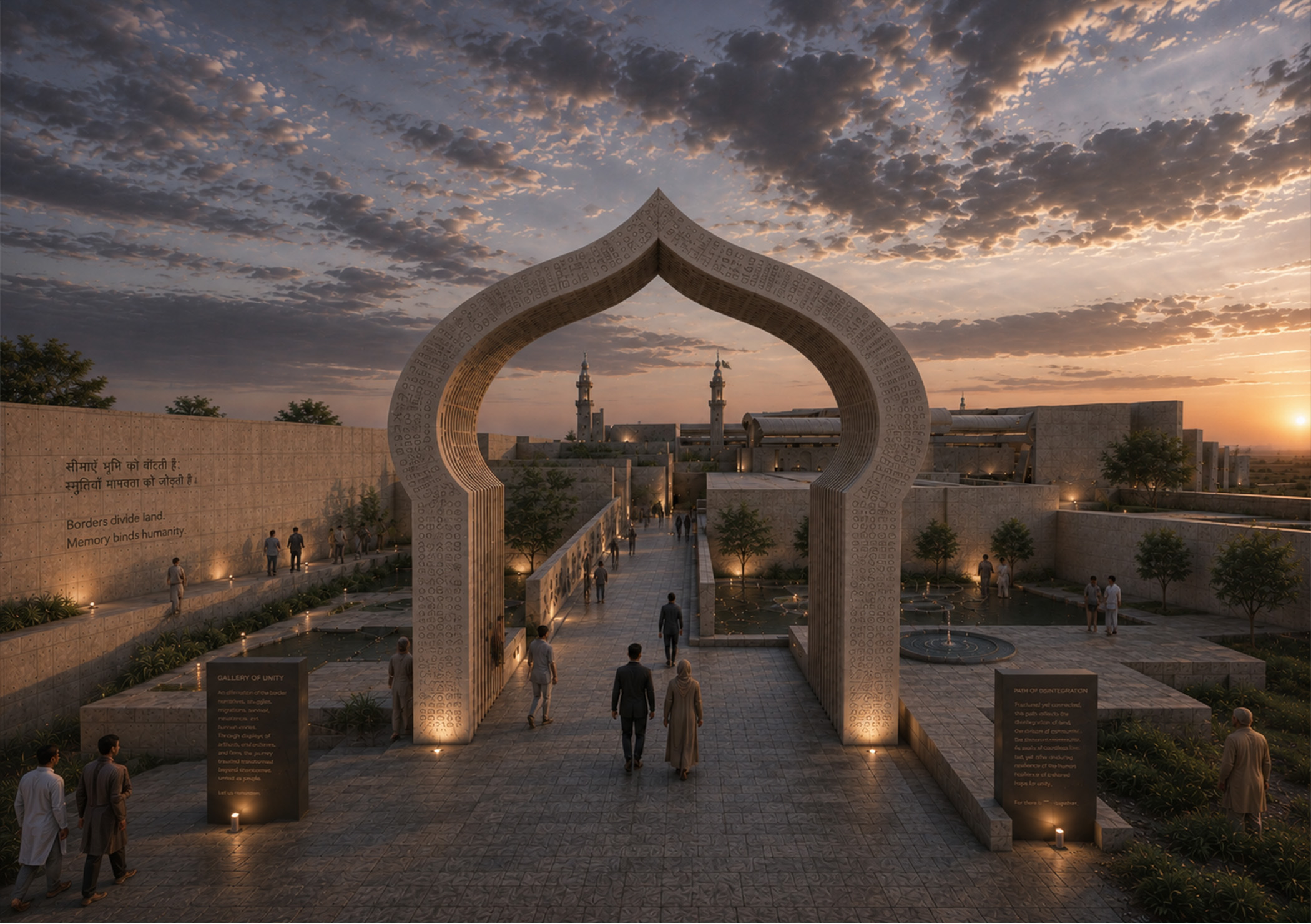
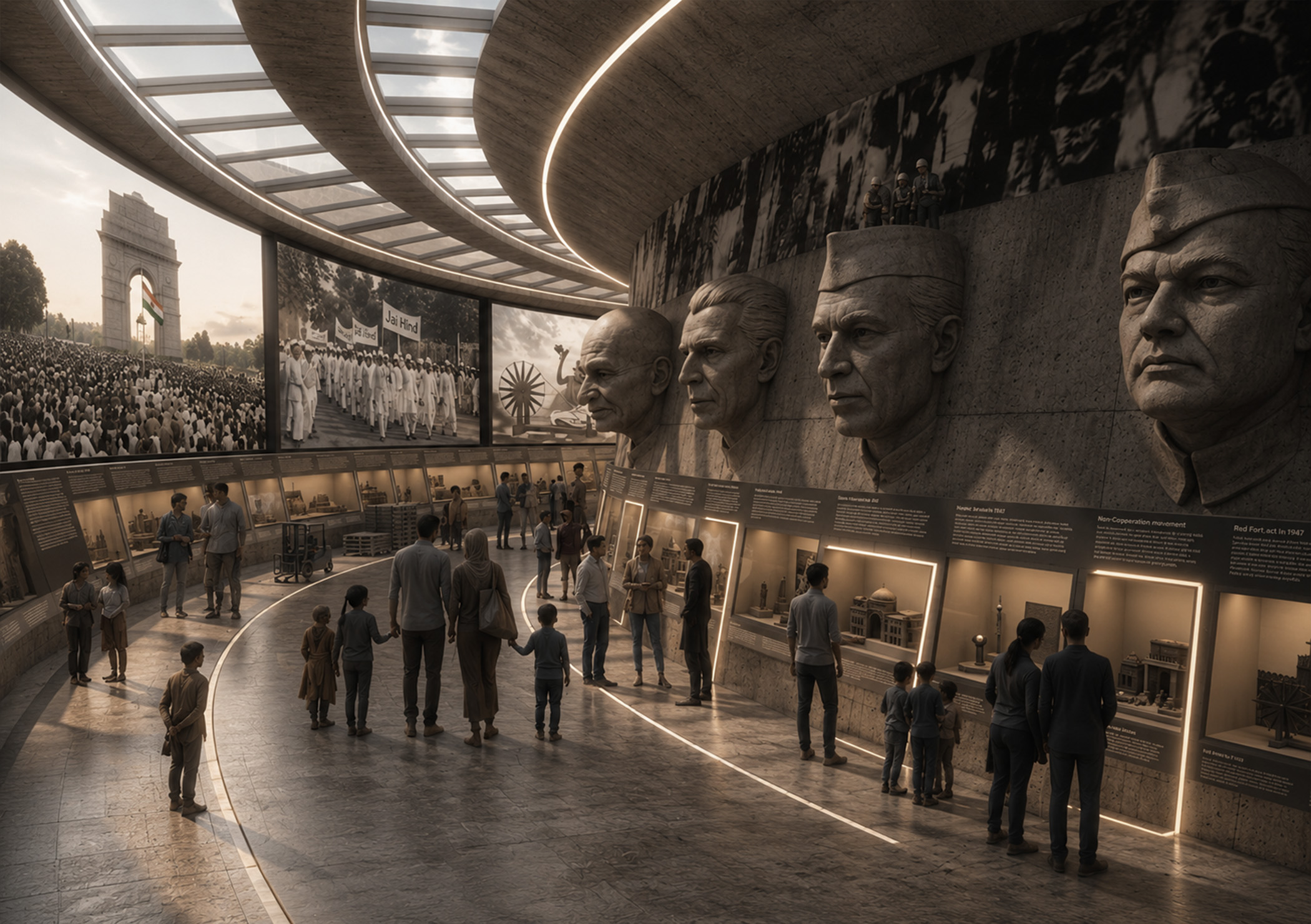
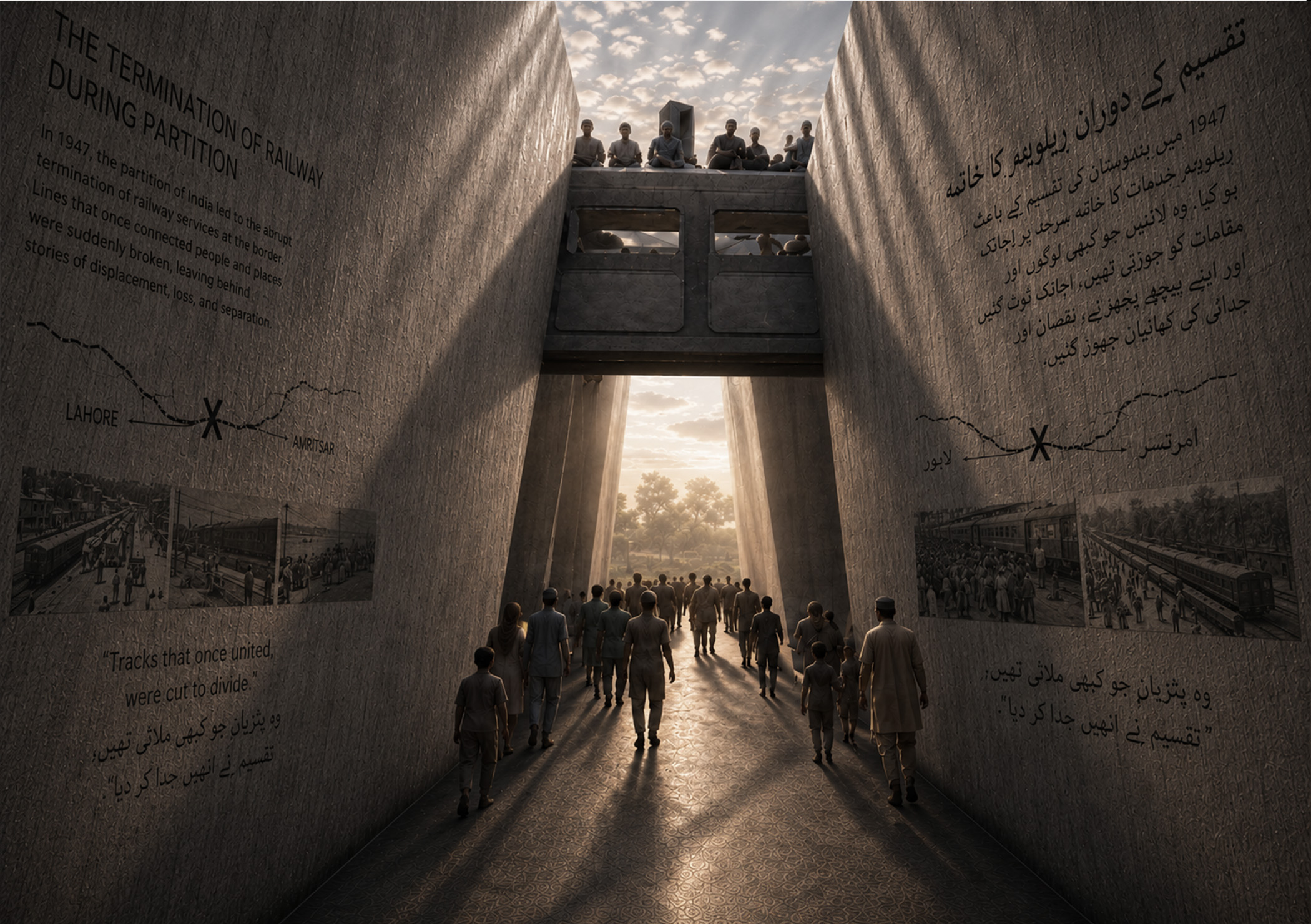
Borderland Peace Memorial reimagines the India–Pakistan border as an architecture of empathy rather than division. Through a phenomenological and narrative-driven design approach, the project transforms memory into an immersive spatial journey where movement, light, shadow, materiality, void, and silence become the language of architecture. Instead of relying on monuments or literal symbolism, the memorial translates the emotional realities of Partition into sequential experiences that guide visitors from rupture and loss toward understanding, dialogue, and reconciliation. Shared landscapes, culture, and everyday life replace the perception of separation, revealing the border as a space of common human values rather than conflict. By making architecture itself the medium of narration, the project demonstrates how spatial experience can dissolve psychological boundaries and transform a contested frontier into a place of collective memory, healing, and hope.
Firozpur, Punjab, India
I am a recent Bachelor of Architecture graduate from the Faculty of Architecture, Parul University. I am passionate about phenomenology, architectural narratives, and experiential design, exploring how architecture can evoke emotions and communicate stories through space. I am excited to present my undergraduate thesis, Borderland Peace Memorial, a phenomenology-based project that reimagines the India–Pakistan border as a landscape of memory, dialogue, and reconciliation.
Shivangi Soni
Shivangi Soni
https://drive.google.com/drive/folders/1PJe0yYq68pMDoSEVDNo7-rjCDcRbWck_?usp=drive_link
Thesis Guide: Yatin Pandya, Prof. Percy Pithawala, Priyanshu Shrivastava