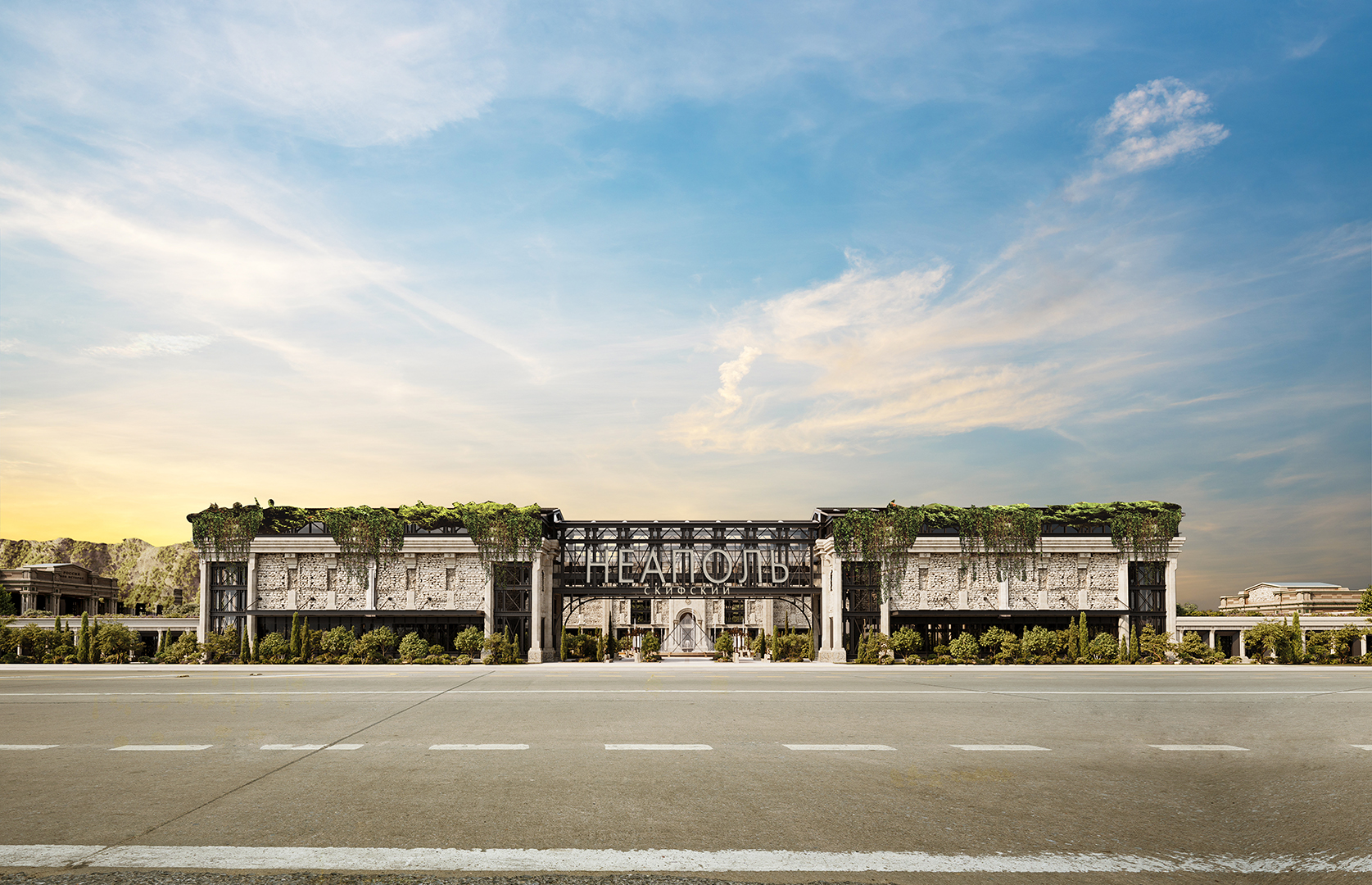
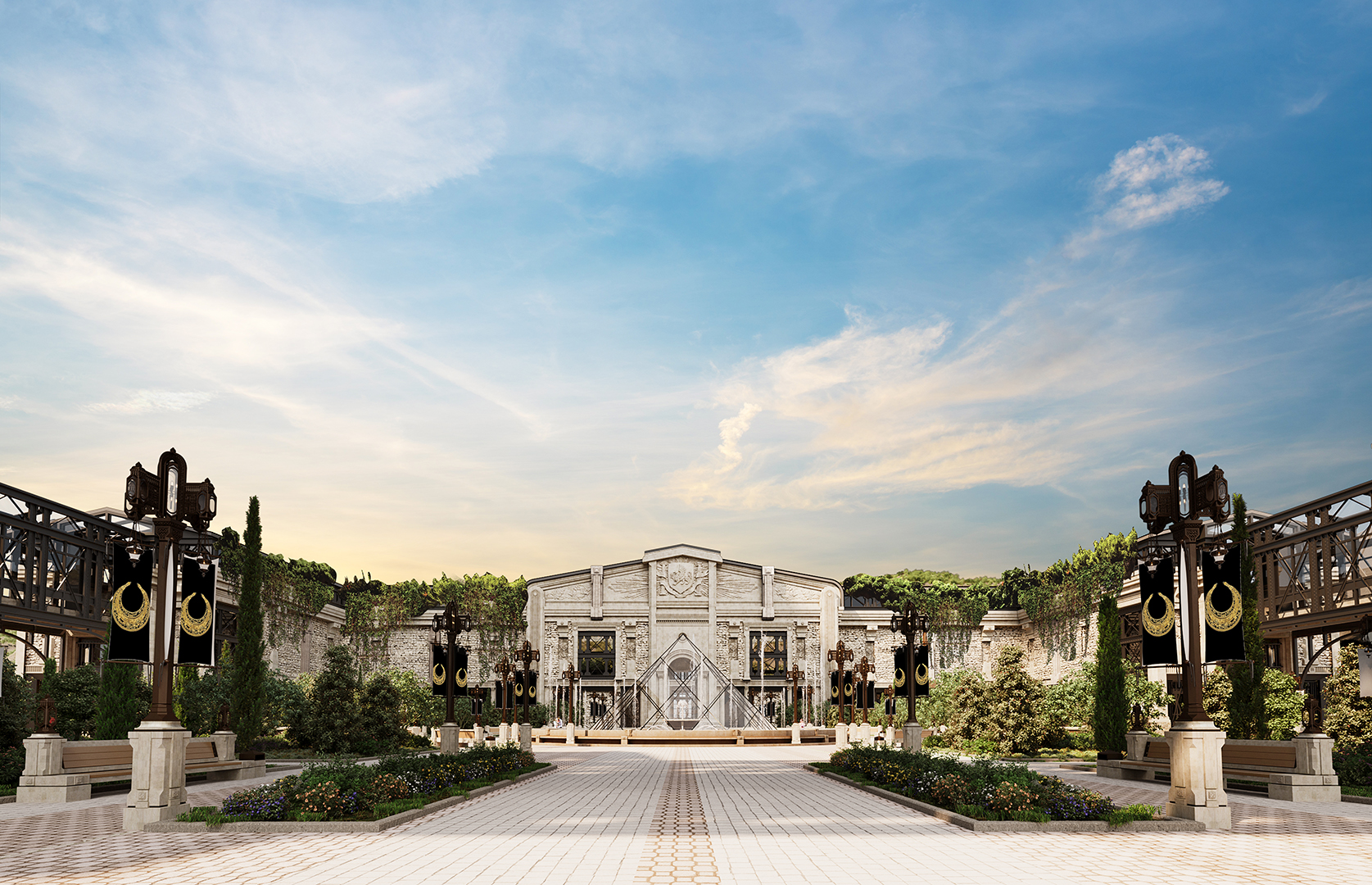
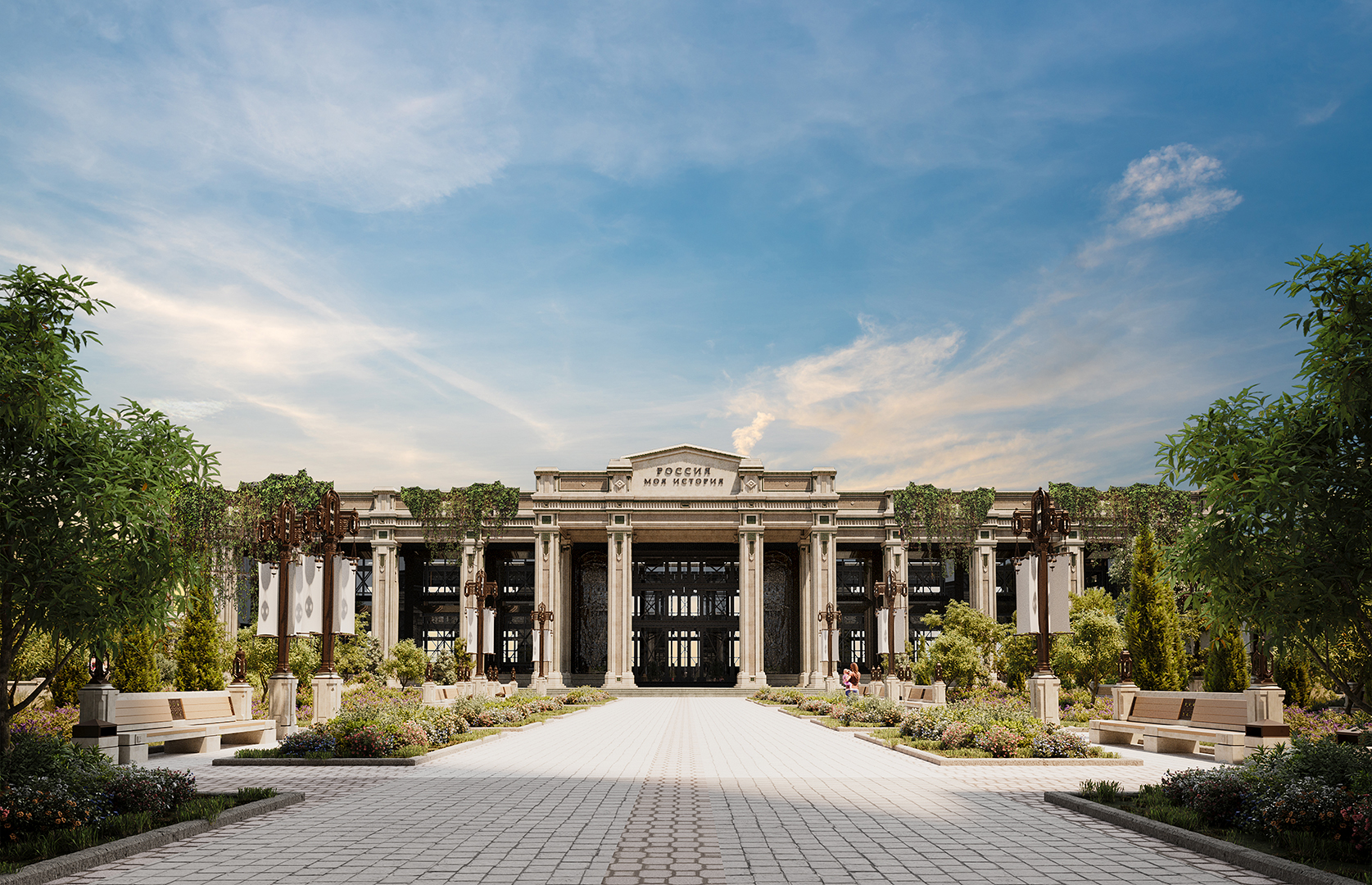
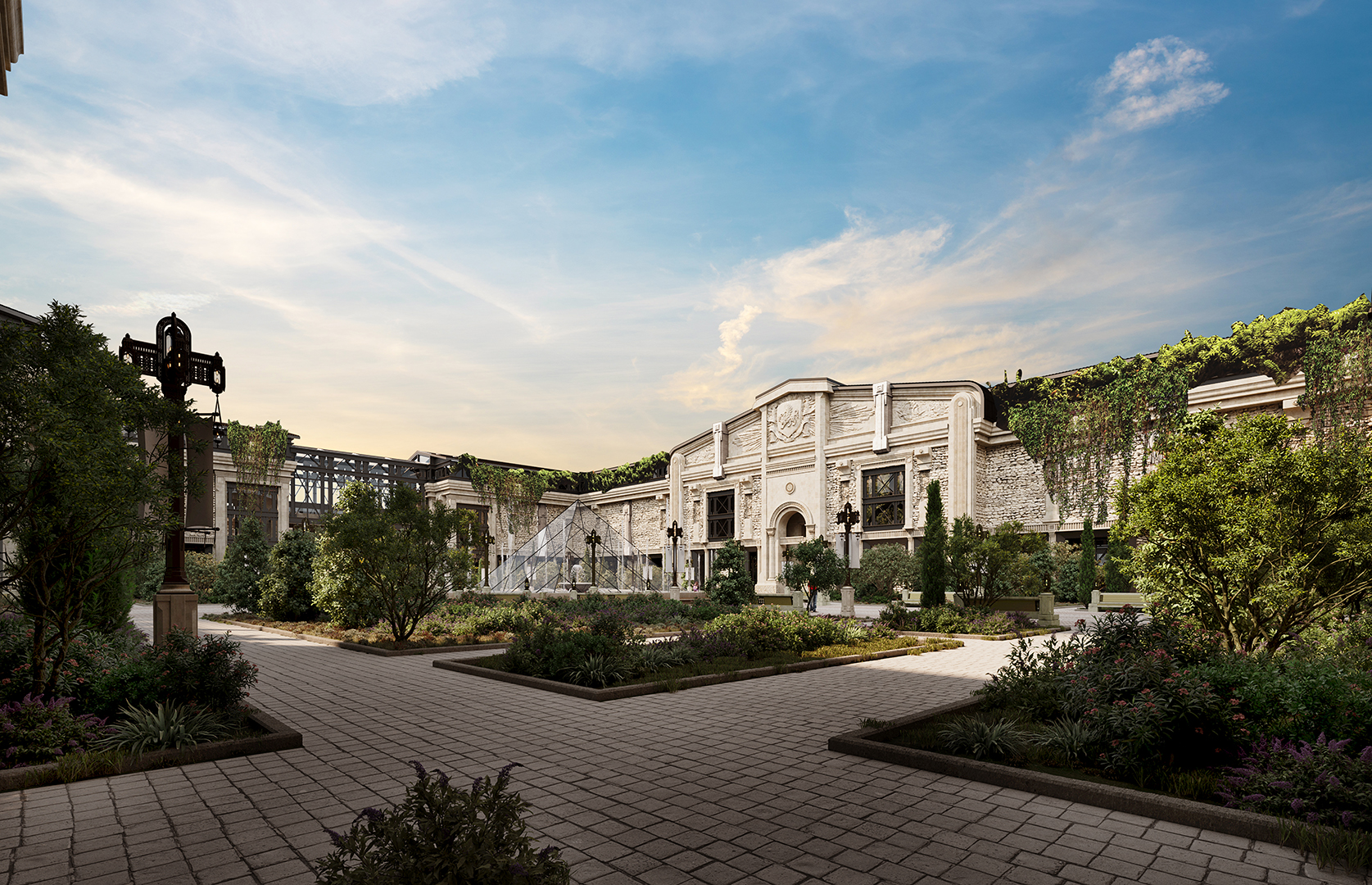
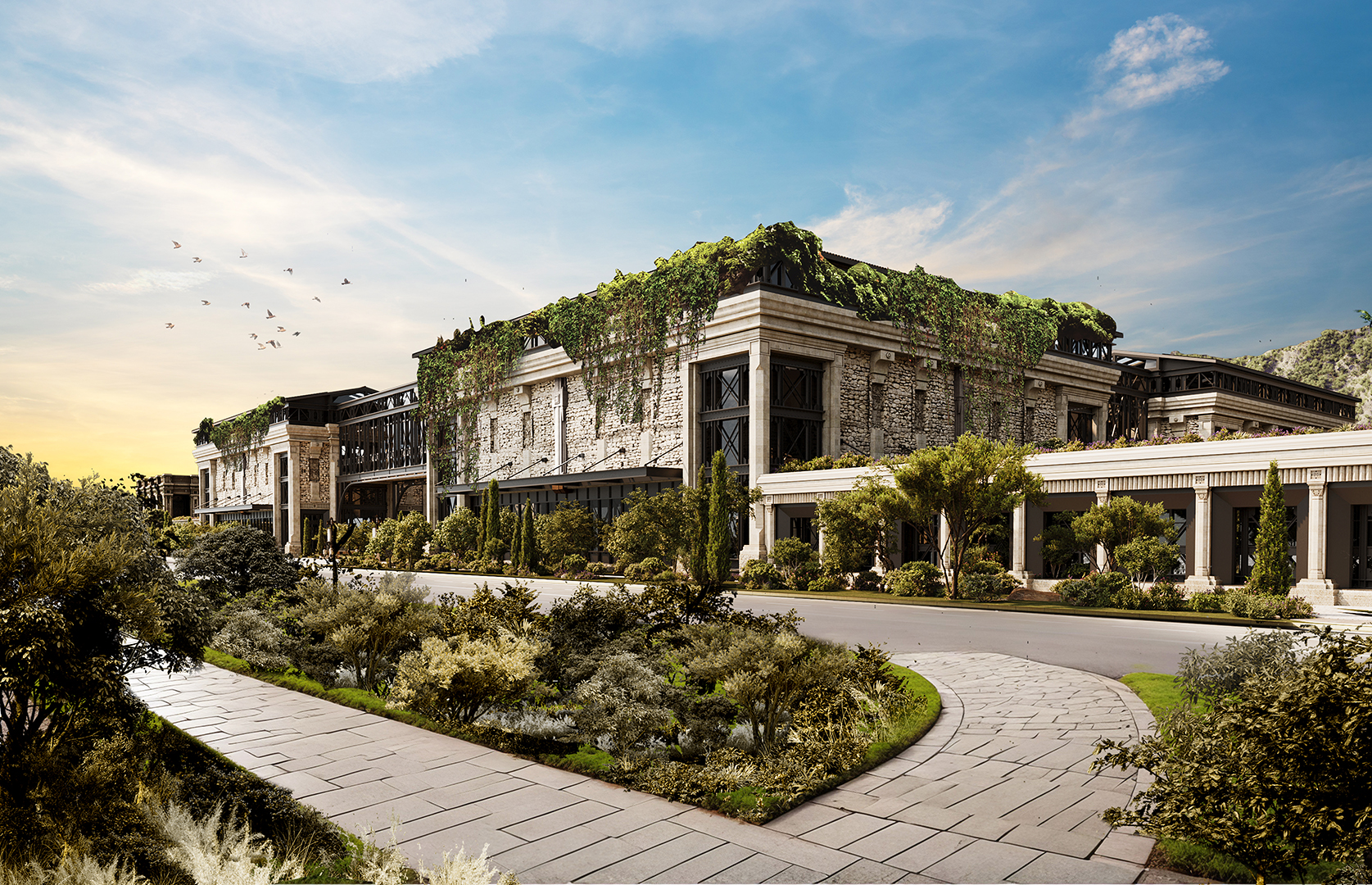
The architectural ensemble of the "Scythian Neapolis" historical monument museum complex in Simferopol is conceived as a "citadel of knowledge" carefully integrated into the terrain. Its key facilities include an archaeological museum (10,966 sq. m), a historical museum (5,568 sq. m), an amphitheater, and reconstructions of ancient settlements.
The space-planning solution is based on a large rectangular perimeter. Extended blocks close around an internal courtyard that establishes clear, intuitive navigation. The main volume features an entrance group marked by a grand portal, while the facade articulation relies on a contrast between stone massiveness and transparent elements, expressed through a rhythm of pylons, deep apertures, and glazed connecting bridges.
The central concept is the "museum-garden": green, occupiable roofs visually extend the natural slope and create scenic walking routes. Together with the ancient archaeological site, the designed complex achieves a seamless unity of architecture, nature, and the memory of place.
23 Vorovskogo St, Simferopol, Republic of Crimea, Russia
"Sretenskie Masterskie" is a studio founded by Dmitry Smirnov in 2012 that specializes in sustainable architecture, urbanism, engineering, and design, creating a synthesis of architecture, art, and digital technologies to form a holistic spatial experience. The completed projects — museums, churches, and memorial spaces — are capable of preserving meaning, artistic value, and cultural "memory" for centuries, as they belong to a typology where longevity is embedded in the very nature of their function.
Dmitry Smirnov / Sretenskie Masterskie
Sretenskie Masterskie