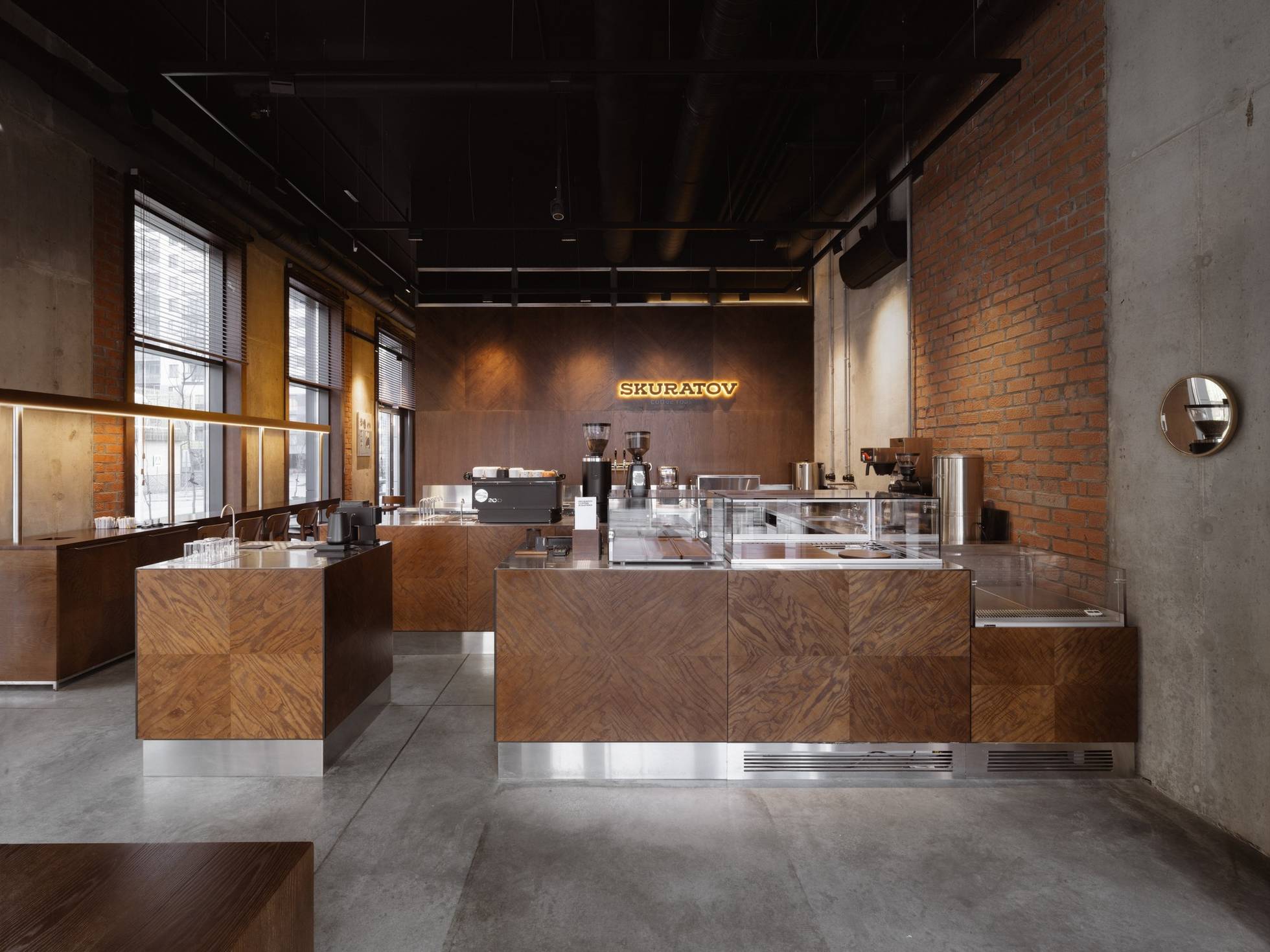
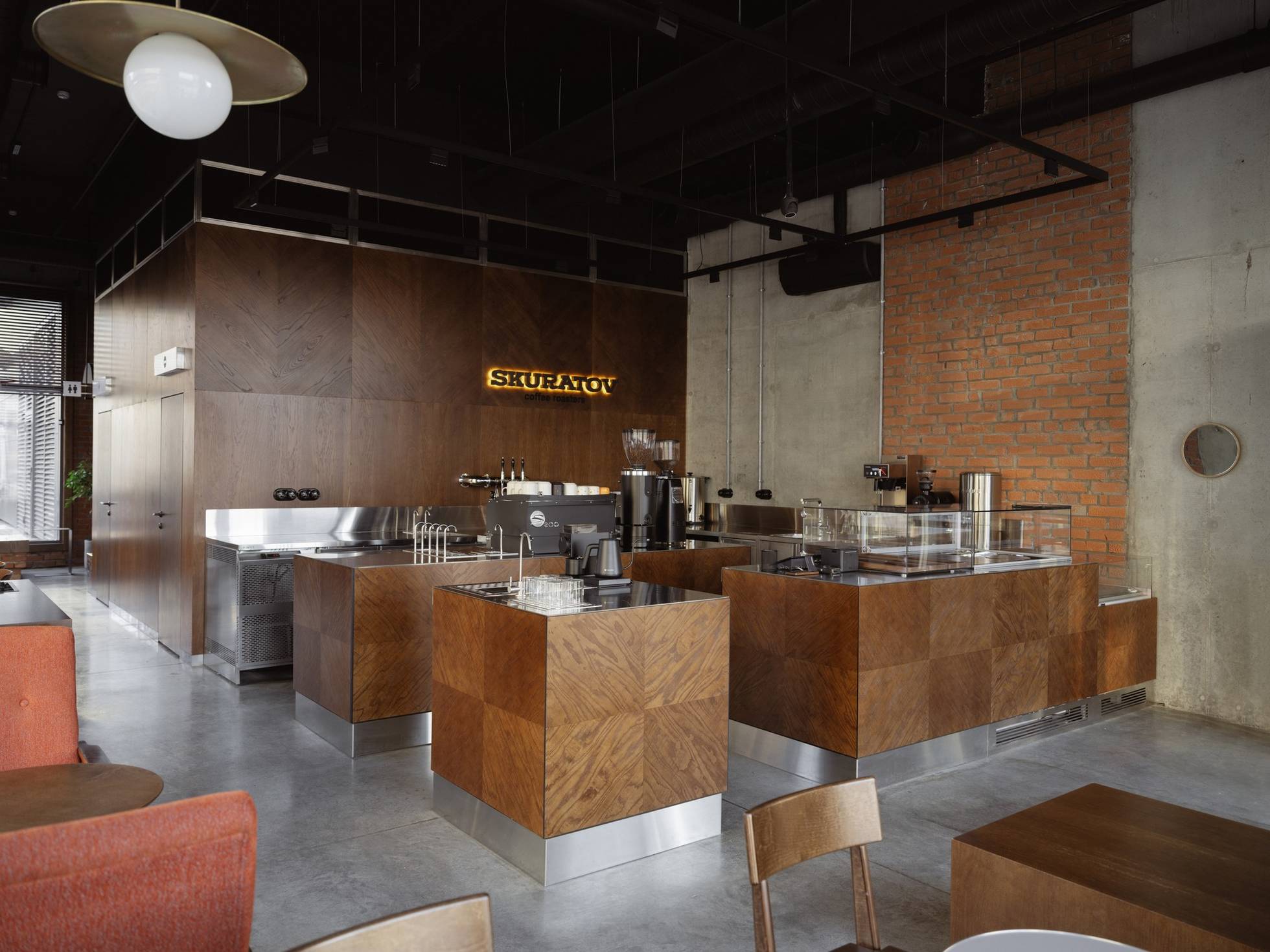
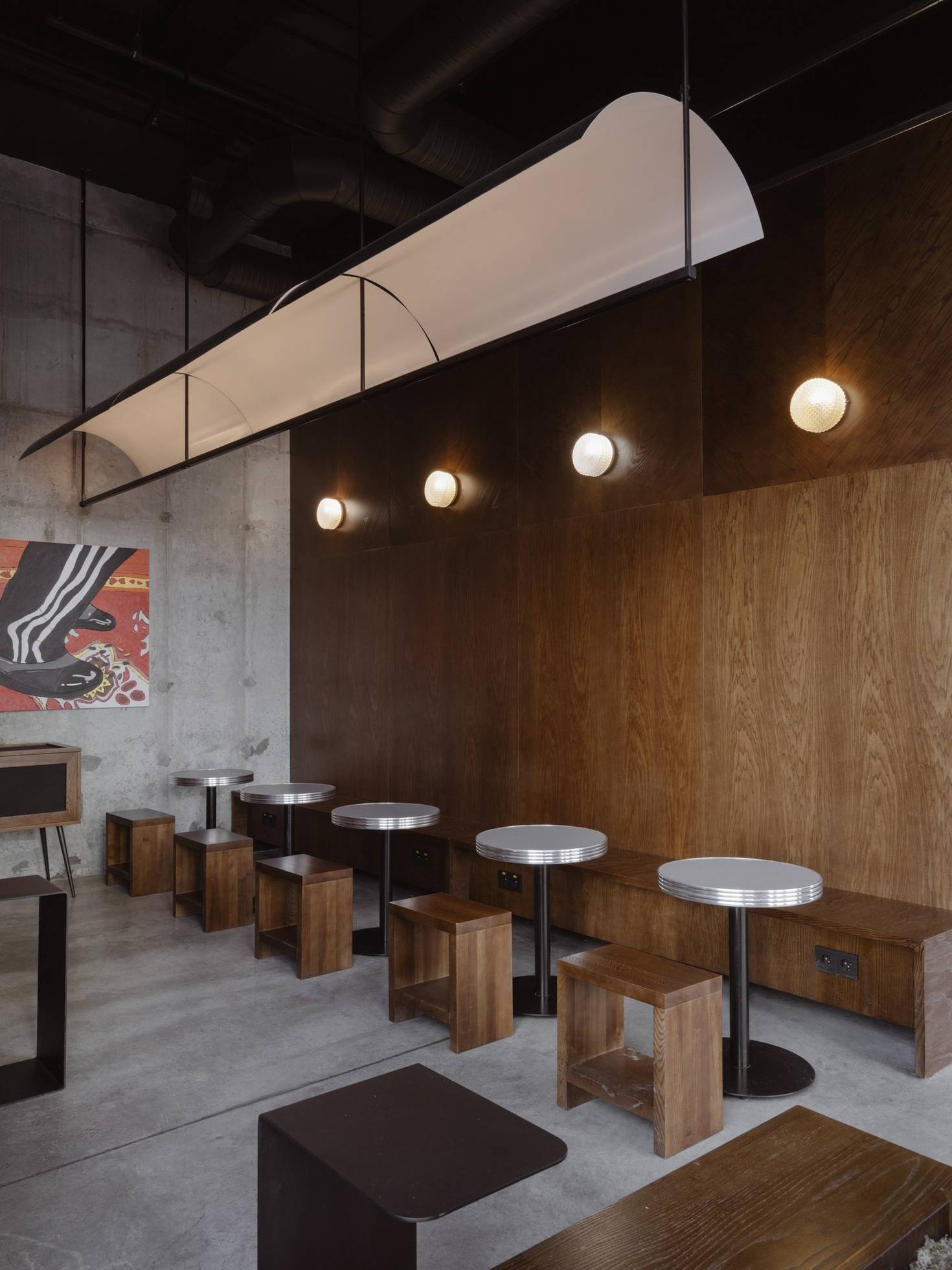
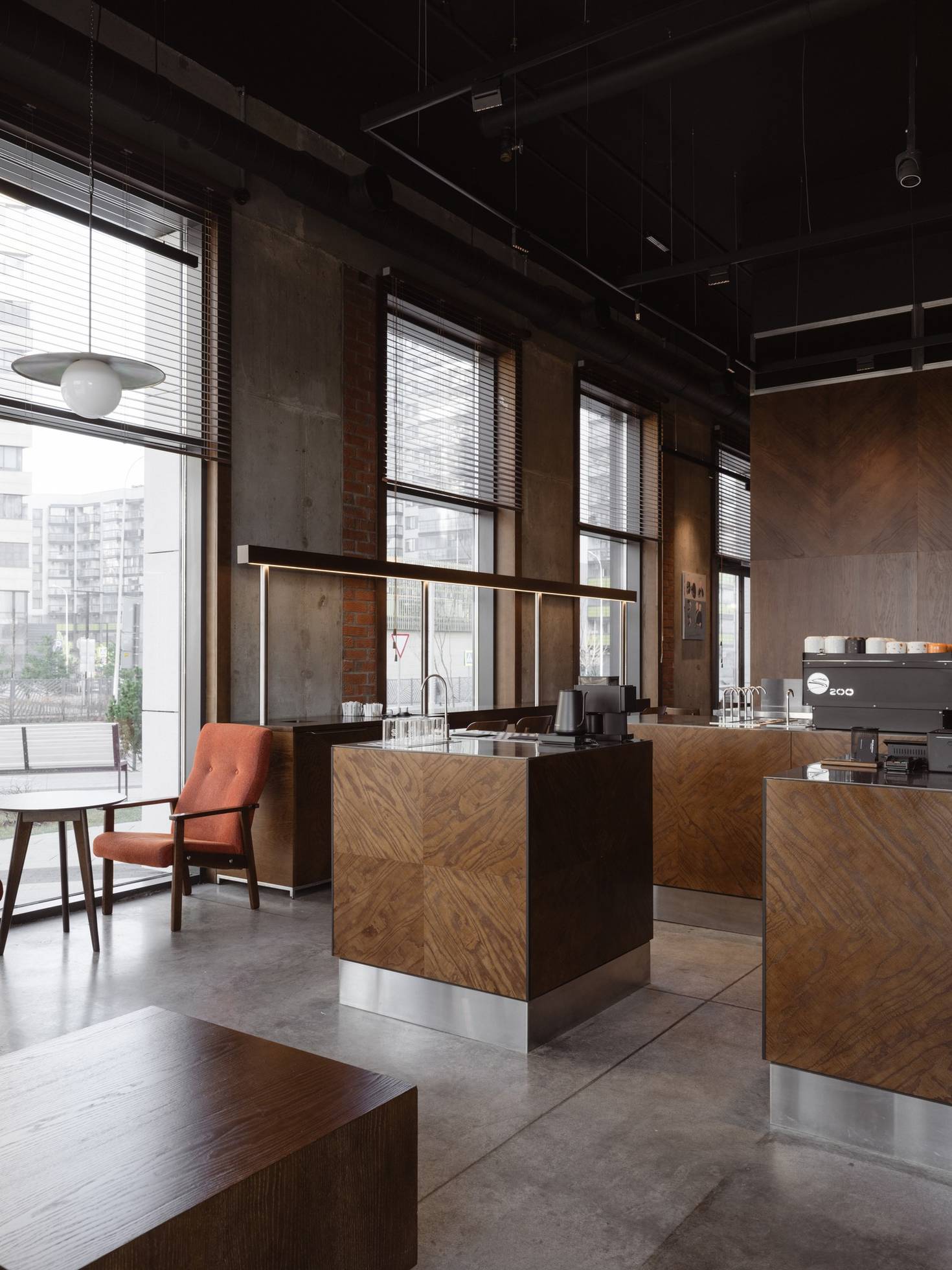
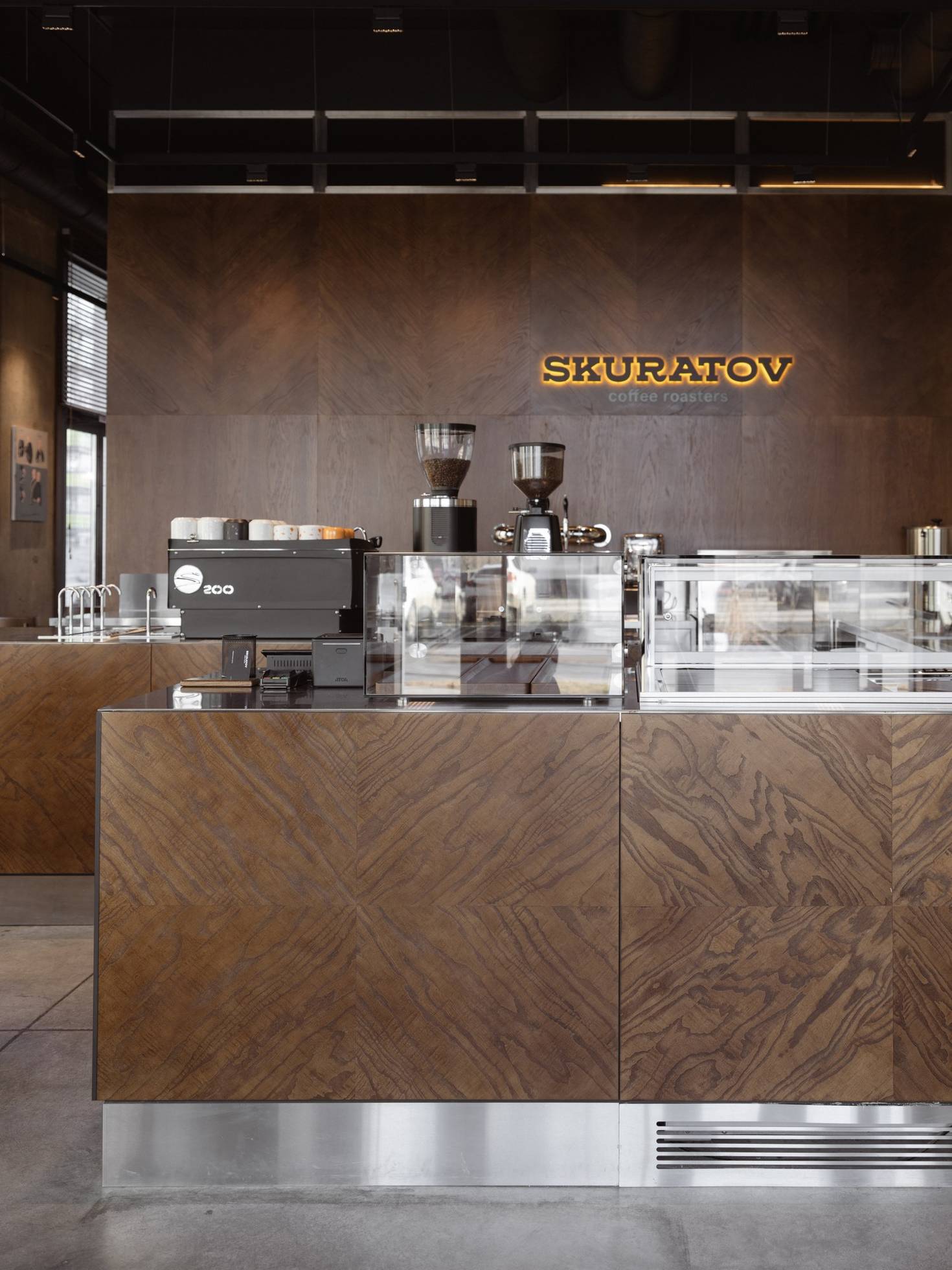
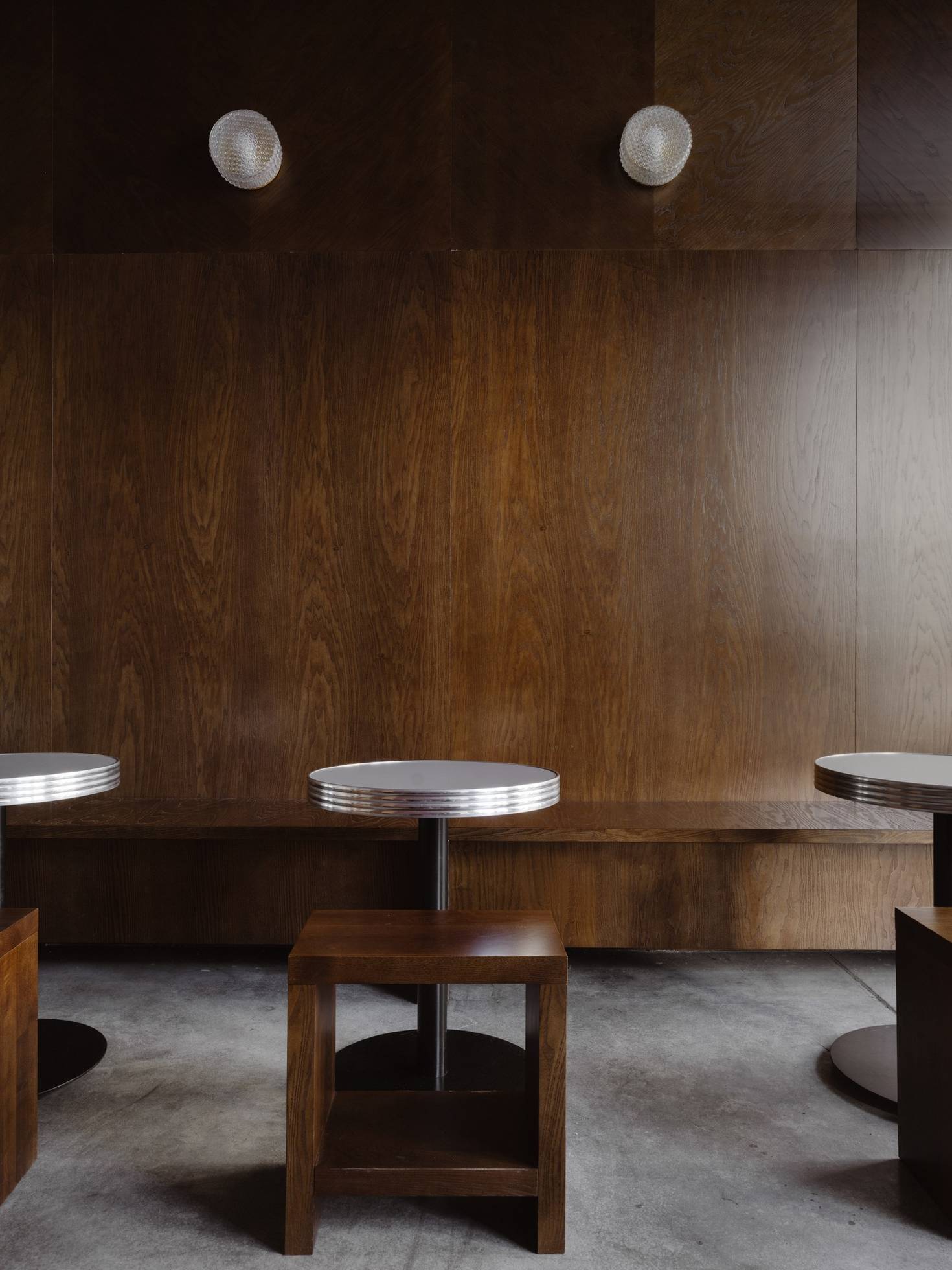
The concept grew from the philosophy of 1950s Japanese tube audio gear: honest materials, visible mechanisms, nothing concealed. Light is a direct nod to Tanizaki’s essay "In Praise of Shadows": coziness is created not by brightness, but by reflection. All lighting is diffused and hidden, warm (2700–3000K), without a single direct beam.
This logic finds architectural embodiment in the central volume — a timber-and-metal cube with an illuminated upper edge, occupying a pronounced high-altitude zone in the hall. The cube is neither furniture nor decor, but a load-bearing planning element: it divides visitor traffic flows, sets the scale for the entire space, and forms internal personal seating zones alongside hidden storage. Architecture becomes furniture. Six scenarios are built around the cube — ranging from a short encounter at the bar to quiet work on a shared bench in the back room.
The bar is the dominant feature of the entrance zone: three parallel lines of stainless steel modules, resembling audio hardware chassis. The materials function as a system rather than a set of trends: walnut and teak follow Akai's logic, while aluminum acts as the machinery.
62 Sibgata Khakima St., Kazan, Republic of Tatarstan, Russia
https://maketdesign.com/ru/projects-ru/skuratov-coffee-roasters
MAKET is a multidisciplinary architecture and interior design studio. We specialize in creating commercial interiors and branding for clients across Russia and worldwide.
Konstantin Ostroukhov, Artem Petrov
Inna Kablukova
https://drive.google.com/drive/folders/1XOND-8sjU8YvpjuYvXamoMI8_aQ7eNOV?usp=sharing